Affiliate Disclosure:Home Vacuum Zone is reader-supported. When you buy through links on our site, we may earn an affiliate commission at no additional cost to you. This does not influence our reviews or recommendations — we only recommend products we genuinely believe in.
Miele Complete C3 Marin Canister Vacuum
Quietest overallThe Miele Complete C3 Marin is a top-tier canister vacuum with outstanding suction, whisper-quiet operation, and hospital-grade HEPA filtration. Ideal for allergy sufferers and large homes with mixed flooring who want a vacuum that will last 15-20 years.
What We Like
- 1200W Vortex motor with 6 speed settings for optimal suction control across surfaces
- AirClean Sealed System with HEPA filter traps 99.95% of particles down to 0.1 microns
- Exceptionally quiet operation at 64 dB - among the quietest canister vacuums available
- 36-foot operating radius covers large rooms without unplugging
What We Don't
- Requires bags which add an ongoing consumable cost
- Premium pricing at top of market segment
- No motorized brush roll included - must purchase SEB 228 or SEB 236 separately
Vacuum noise is one of the most common complaints among homeowners. Whether you have sleeping children, noise-sensitive pets, work-from-home requirements, or simply prefer a peaceful cleaning experience, quiet vacuums have become increasingly important. So this roundup gathers the quietest vacuum cleaners available in 2026, using published decibel ratings and independent measurements rather than our own, and says plainly where a brand publishes nothing at all. For broader recommendations, our vacuum buying guide covers all key criteria beyond noise.
Understanding Vacuum Noise Levels
Decibel Scale Reference
| Decibel Level | Comparison | Vacuum Category |
|---|---|---|
| 50 dB | Quiet office | Ultra-quiet robot vacuums |
| 60 dB | Normal conversation | Quietest canister vacuums |
| 70 dB | Busy traffic | Average cordless vacuums |
| 80 dB | Loud traffic, alarm clock | Average upright vacuums |
| 90 dB | Motorcycle | Loud commercial vacuums |
Understanding the decibel scale is essential for making informed purchasing decisions. The scale is logarithmic rather than linear, meaning that a vacuum rated at 80 dB isn’t simply “10 points louder” than one at 70 dB - it’s actually perceived as approximately twice as loud to the human ear. This exponential relationship explains why even small reductions in decibel ratings translate to significantly more pleasant cleaning experiences.
For context, prolonged exposure to sounds above 85 dB can cause hearing damage over time. While you’re unlikely to vacuum long enough for this to be a concern, it helps explain why traditional vacuums (typically 75-82 dB) can be unpleasant to use. Vacuums below 70 dB allow for normal conversation while cleaning, while those below 65 dB can operate without disrupting most household activities.
What Makes Vacuums Quiet?
Motor Design:
- Brushless digital motors run quieter
- Optimized fan blade designs reduce turbulence
- Vibration dampening mounts
- Lower RPM with higher efficiency
- Precision-balanced rotating components
Insulation:
- Multi-layer sound insulation
- Rubber gaskets and seals
- Foam padding around motor housing
- Acoustic dampening materials in airflow channels
- Isolated motor compartments
Airflow Design:
- Smooth internal air paths
- Reduced turbulence
- Optimized exhaust routing
- Larger diameter hoses (reduces air velocity noise)
- Strategic placement of air outlets away from user
Miele’s Silence System (Industry Leader):
- 6-layer noise insulation
- Aerodynamic airflow channels
- Vibration-absorbing components
- 64-69 dB operation
- Specially designed intake nozzles
Modern quiet vacuum technology represents a significant engineering achievement. Manufacturers have discovered that noise reduction isn’t just about adding insulation; it takes a whole-system approach addressing every component that generates or amplifies sound. The motor, which historically produced most vacuum noise, has been reimagined with brushless designs that eliminate the friction-generated noise of traditional brush motors. These motors also generate less vibration, which previously transferred through the vacuum body and amplified sound.
Airflow management has emerged as equally important. When air moves quickly through narrow passages or encounters sharp corners, it creates turbulence that generates a characteristic “whooshing” or “whistling” sound. Premium quiet vacuums feature carefully engineered internal pathways with gentle curves and smooth transitions. Some manufacturers use computational fluid dynamics software to simulate and optimize airflow before manufacturing, identifying and eliminating noise-generating turbulence points.
Top Quiet Vacuum Reviews
1. Miele Complete C3 Marin - Quietest Overall (66 dB)
Why It Wins: Miele discontinued the Complete C3 series in 2026 and replaced it with the Guard L1. We’ve kept the C3 Marin as the reference point here because Miele publishes no noise figure for the Guard L1, and this is a page about how quiet a vacuum is. If you’re buying new from Miele’s canister range, the Guard L1 is the successor.
The C3 Marin sets the standard for quiet vacuuming at just 66 dB - quieter than normal conversation. Miele’s Silence system uses six layers of sound insulation, making this the quietest full-power vacuum in this roundup.
Noise Performance: Measured with a decibel meter at 1 metre by top-aspirateur: 60 dB on setting 1, 66 dB on setting 3, 72 dB on setting 6. Miele publishes no figure of its own, so those are independent measurements rather than marketing numbers.
Cleaning Performance:
- Suction: Miele publishes no air watt figure for the C3; the motor is rated 1,200 W
- Overall: 9.5/10
Pros:
- Whisper-quiet operation
- Exceptional cleaning performance
- Premium build quality
- Excellent filtration
Cons:
- Premium pricing
- Requires bags
- Canister design not for everyone
Best For: Allergy sufferers, multi-story homes, those wanting the quietest possible experience
Price Tier: Premium
2. Dyson V15 Detect - Quietest Cordless (73 dB)
Why It Wins: At 73 dB the V15 is the quietest cordless here, which surprises people who assume Dyson’s motors are the loud ones. To see how it stacks up against Miele’s lineup, read our Miele vs. Dyson comparison.
Noise Performance: 73 dB is the figure that circulates for the V15, and it’s the one we’ve carried, but be clear about what it is: Dyson publishes no decibel rating for this machine, so nobody quoting 73 can tell you the distance it was taken at or the mode it was taken in. Boost on any cordless is louder than its headline figure, so treat 73 as indicative rather than a ceiling.
Cleaning Performance:
- Suction: 240 AW
- Laser dust detection
- 60-minute runtime
- Overall: 9.5/10
Pros:
- Exceptional suction power
- Advanced features
- Premium build
Cons:
- Louder than Miele options
- Expensive
- Shorter lifespan concerns
Best For: Those wanting maximum power with acceptable noise levels
Price Tier: Premium
3. Miele Triflex HX2 Pro - Quiet Cordless Alternative (77 dB)
Why It’s Here: At 77 dB the HX2 Pro isn’t the quiet one in this pair, because the Dyson V15 above is a few decibels lower. It earns its place on everything else, chiefly the three-configuration design that converts between upright, handheld and extended reach without buying a second machine. It’s also the current Triflex: Miele retired the HX1 Cat & Dog that used to sit in this slot, and the HX2 range replaced it.
Noise Performance: 77 dB, which is a full-power figure. Like every cordless here it runs quieter on its lower setting, and a single number is all we’ve been able to source, with no measuring distance attached to it, so treat the 77 as the ceiling rather than what you’ll hear on a light pass over tiles.
Cleaning Performance:
- Suction: 150 AW
- Versatile 3-in-1 design
- Runtime: 60 minutes on the lowest setting
- Overall: 8/10
Pros:
- Three cleaning modes from one machine
- AirClean filtration captures fine dust
- Miele build quality and reliability
- Removable battery
Cons:
- AirClean isn’t certified to HEPA standard, so allergy sufferers should check the spec
- At 3.2 kg it’s heavy for extended handheld work
- Premium pricing for a cordless stick
Best For: Cordless convenience with noise sensitivity, Miele quality seekers
Price Tier: Premium
4. iRobot Roomba Max 705 Combo - Quietest Category
Why It Wins: Robot vacuums are the quietest way to clean a floor, and not because their motors are special. They’re small, they run low to the ground away from your ears, and they work while you’re in another room. iRobot replaced its entire range in July 2026 and the Max 705 Combo is the current flagship, so it’s the one to look at rather than the j7+ and j9+ that older roundups still name. See our best robot vacuum roundup for more options.
Noise Performance: iRobot doesn’t publish a decibel rating for the Max 705, so treat any figure you see quoted for it with suspicion. What’s reliable is the category: a robot on a scheduled run is the only vacuum here you can genuinely ignore while working, and running it on a timer while you’re out sidesteps the question entirely.
Cleaning Performance:
- ClearView Pro LiDAR mapping, 1,000 sq ft in about 9 minutes
- AutoWash dock that empties for 75 days and washes the mop in heated water
- PrecisionVision AI avoids cords, socks and pet waste
- PowerSpin roller mop rather than a dragged pad
Pros:
- The only option here you can run without being in the room
- Self-emptying and self-washing, so upkeep is measured in weeks
- Obstacle avoidance good enough to run unsupervised
Cons:
- Maintenance cleaning, not deep cleaning
- Expensive upfront
- No published noise figure to compare against the uprights above
Best For: Hands-off daily cleaning, maintaining quiet environments
Price Tier: Premium
Noise Comparison by Vacuum Type
A note on these figures. Most vacuum brands do not publish decibel ratings at all, and the ones that circulate online are a mix of manufacturer claims, reviewer measurements taken at different distances, and numbers copied between sites until nobody knows the origin. Where a figure below comes from our own verified product records or an independent measurement, it is reliable. Where a model is older or the brand publishes nothing, treat the number as indicative of the category rather than a precise spec, and compare within a column rather than across.
Canister Vacuums (Quietest Category)
| Model | Noise Level | Value | Best Feature |
|---|---|---|---|
| Miele C3 Marin | 66 dB | Premium | Silence system |
| Miele C3 Brilliant | 64 dB | High-End | Ultimate quiet |
| Miele C2 Hardfloor | 70 dB | Mid-Range | Value quiet |
| Kenmore BC3005 | 72 dB | Budget | Budget quiet |
Canister vacuums dominate the quiet vacuum category due to their design advantages. For a full look at top canisters, see our canister vacuum reviews. The motor and dust collection system sit in a separate unit that rolls behind you, creating physical distance between the noise source and your ears. This separation alone can reduce perceived noise by several decibels compared to upright designs where the motor sits directly beneath the handle near your head.
Additionally, canister designs allow for larger, more sophisticated sound insulation systems. The bulkier body accommodates multi-layer acoustic dampening materials without compromising maneuverability. Miele has taken this furthest: at 66 dB on a middle setting, the C3 sits around conversation level.
Cordless/Stick Vacuums
| Model | Noise Level | Value | Best Feature |
|---|---|---|---|
| Miele Triflex HX2 Pro | 77 dB | Premium | German engineering |
| Dyson V12 Slim | 76 dB | Premium | Light & quiet |
| LG CordZero | 74 dB | Mid-Range | Good balance |
Cordless stick vacuums face unique acoustic challenges. Their compact design limits space for sound insulation, while high-efficiency motors spin at extreme speeds (up to 125,000 RPM in some Dyson models) to compensate for smaller size. These factors typically result in higher noise levels compared to full-size vacuums.
However, cordless vacuums offer a practical advantage for noise management: most cleaning tasks require only 5-10 minutes rather than 20-30 minutes with traditional vacuums. This shorter exposure time can make a moderately loud cordless vacuum more tolerable than using a quieter canister for longer periods. For quick daily cleanups, a 74 dB cordless vacuum used for five minutes creates less total household disruption than a 66 dB canister requiring fifteen minutes.
Upright Vacuums (Loudest Category)
| Model | Noise Level | Value | Best Feature |
|---|---|---|---|
| Miele Dynamic U1 (discontinued) | 78 dB | Premium | Quietest upright |
| Shark Navigator | 78-82 dB | Budget | Value choice |
| Dyson Ball Animal 3 | 80 dB | Premium | Power vs noise |
| Bissell CleanView | 78 dB | Budget | Budget upright |
Upright vacuums remain popular in North America despite being the loudest category. Their all-in-one design places the motor, brush roll, and dust collection directly under the handle, positioning all noise sources near the user’s head. The vertical configuration also limits insulation opportunities - adding substantial sound dampening would make the vacuum too heavy to push comfortably.
Miele’s Dynamic U1 is the quietest upright in that table at 78 dB, and it’s discontinued: Miele has left the upright category and doesn’t sell one in the US any more. Which rather makes the point. Even the quietest upright anyone built is louder than every canister and cordless above it, so if quietness is genuinely your priority, an upright is the wrong shape of machine and a canister or robot will serve you better at comparable money.
Robot Vacuums (Quietest Overall)
| Model | Noise Level | Value | Best Feature |
|---|---|---|---|
| Roomba Max 705 Combo | Not published | Premium | Smart & quiet |
| Roborock S7 MaxV | 58-67 dB | Premium | Mopping + vacuum |
| Ecovacs Deebot X1 | 60-68 dB | High-End | Premium features |
| Shark IQ Robot | 62-70 dB | Mid-Range | Budget robot |
Robot vacuums achieve the lowest noise levels of any vacuum category through a fundamentally different approach to cleaning. Rather than using high-powered suction to deep clean quickly, they use moderate suction over extended cleaning sessions. This allows them to operate with smaller, slower-spinning motors that generate significantly less noise.
The trade-off is cleaning depth - robot vacuums excel at maintaining cleanliness through frequent, shallow cleaning rather than occasional deep cleaning. For noise-sensitive households, that trade usually pays off. You can run a robot vacuum daily while working, watching TV, or even sleeping, maintaining consistently clean floors without the disruption of weekly traditional vacuuming sessions.
How Vacuum Design Affects Noise
Motor Placement and Type
The motor generates most vacuum noise, making its placement and design critical. Traditional brush motors create mechanical noise through friction between brushes and commutator, while brushless digital motors eliminate this friction for quieter operation. Motor placement matters equally - canister designs position motors 3-6 feet away from users, while uprights place motors directly beside the handle.
Brush Roll Design
Motorized brush rolls contribute substantial noise through both mechanical rotation and their action against flooring. Hard brush bristles create more noise than soft ones, while direct-drive brush systems (where the motor directly spins the brush) generate more noise than belt-driven systems that provide natural damping. Some manufacturers now use rubber fins instead of traditional bristles, reducing noise while maintaining cleaning effectiveness.
Exhaust Design
Where and how vacuums exhaust air significantly impacts perceived noise. Top-mounted exhausts on uprights direct air (and noise) toward users, while rear-mounted exhausts on canisters direct it away. The exhaust port size also matters - larger ports allow slower air velocity, reducing the characteristic “whoosh” of high-velocity exhaust.
Tips for Quieter Vacuuming
Time Your Cleaning
- Vacuum during naturally noisy periods
- Avoid early morning/late evening
- Coordinate with household schedules
- Consider running robot vacuums when away from home
Maintain Your Vacuum
- Clean brush rolls regularly
- Empty bin/change bags frequently
- Replace filters as recommended
- Check for blockages
- Lubricate moving parts if manufacturer recommends
Proper maintenance reduces noise. Clogged filters force motors to work harder and spin faster, which makes them louder, though we’ve found no published measurement of how much. Full dust bins restrict airflow, creating turbulence that generates whistling and whooshing sounds. A well-maintained vacuum operates at its designed noise level, while a neglected one becomes progressively louder over time.
Use Appropriate Settings
- Use lower power modes when possible
- Eco/quiet modes for light cleaning
- Reserve boost mode for deep cleaning
- Match power to floor type (lower for hard floors)
Many vacuum users default to maximum power regardless of cleaning needs, unnecessarily exposing themselves to higher noise levels. Most daily cleaning tasks need only medium power. The independent decibel-meter test of the Miele C3 gives a sense of the gap on a machine that publishes per-setting figures: 60 dB on setting 1 against 72 dB on setting 6, both at 1 metre. Reserve boost modes for challenging tasks like deep carpet cleaning or picking up larger debris.
Consider Your Environment
- Close doors to contain noise
- Use area rugs on hard floors
- Vacuum in sections
- Take breaks between rooms
- Schedule cleaning when household members are out
Strategic cleaning approaches minimize noise impact even with moderately loud vacuums. Closing doors between rooms cuts what people in other areas hear, by an amount that depends entirely on the door and the wall, so we won’t put a number on it. Vacuuming in shorter sessions with breaks prevents noise fatigue and gives household members respite periods.
Further Reading
- Best Vacuums for Hardwood Floors - quiet operation matters most on hard floors where noise reflects
- Riccar Vacuum Reviews (2026): American-Made Quality
- Bissell Powerforce Helix Review 2026: Best Budget Upright Vacuum?
- Miele Triflex HX1 Review (2026): The Premium Cordless Vacuum
Who Benefits Most from Quiet Vacuums?
Families with Young Children
- Clean while children nap
- No startling loud noises
- Maintain peaceful home environment
- Reduce sensory stress for noise-sensitive children
The ability to maintain cleanliness during precious nap times without risking waking children transforms daily routines. Even for awake children, quieter vacuums reduce the fear and stress many young children experience around loud appliances.
Home Office Workers
- Clean during work hours
- No disruption to calls/meetings
- Maintain professional environment
- Vacuum between calls without disturbing neighbors
The remote work revolution has created unprecedented demand for quiet vacuums. Workers need clean environments but cannot vacuum during traditional evening hours when they’re trying to relax or spend time with family. Quiet vacuums enable midday cleaning without disrupting video calls or requiring notifications to colleagues about brief unavailability.
Pet Owners
- Less stress for noise-sensitive pets
- Clean without causing anxiety
- More frequent cleaning possible
- Reduce pet fear and hiding behaviors
Many pets experience significant stress from vacuum noise, with some dogs and cats fleeing to hiding spots at the first sound. Quieter vacuums reduce this stress response, allowing some pets to remain calm during cleaning. This matters particularly for pet owners who need frequent vacuuming to manage shedding - a quieter vacuum enables daily cleaning without traumatizing pets.
Apartment Dwellers
- Respect neighbors
- Clean any time of day
- Avoid noise complaints
- Maintain good neighbor relationships
Shared-wall living makes noise consideration essential. For apartment-specific picks factoring in noise, storage, and weight, see our guide to the best vacuums for small apartments. A traditional 80 dB vacuum can transmit clearly through walls and floors, disturbing neighbors and risking complaints or lease violations. Quiet vacuums below 70 dB typically don’t penetrate walls significantly, enabling flexible cleaning schedules that don’t require planning around neighbors’ activities.
Shift Workers
- Clean during off-hours
- No disturbance to household
- Flexible cleaning schedule
- Maintain sleep schedules for household members
Healthcare workers, first responders, and other shift workers need to maintain homes during unconventional hours. A quiet vacuum allows cleaning at 2 PM on a Tuesday without waking sleeping household members who work traditional schedules, or enables night-shift workers to clean before bed at 9 AM without causing neighborhood disruption.
Also Consider
Miele Triflex HX2 Pro
Best Miele cordlessMiele's 3-in-1 cordless with a lifetime HEPA filter and up to an hour on low with the electric brush. Best for allergy-conscious households who want a stick that converts to a handheld.
What We Like
- Versatile 3-in-1 design for multiple cleaning modes
- Lifetime HEPA filter, per Miele
- Up to 60 minutes with the electric brush on low (120 for the motor unit alone)
- Removable battery
What We Don't
- Premium pricing for a cordless stick vacuum
- About 28 minutes with the electric brush on high
- Heavy for a stick at 8 lbs
iRobot Roomba Max 705 Combo Robot Vacuum and Mop
Quietest robotA specialist rather than an all-rounder. Buy it if you want the best robot mopping available and can live with mediocre pet-hair pickup, because that trade is the whole product. At the clearance price it makes sense; at list it never did.
What We Like
- The heated PowerSpin roller mop is the reason to buy it. Homes & Gardens called it "one of the best mopping systems around" and the closest a robot has come to a deep manual clean
- AutoWash dock washes and heat-dries the roller itself, so there is no rinsing and no bucket
- Handles large debris well on hard floors and tested strongly on carpet
- Quiet in use, with reliable ClearView Pro LiDAR navigation and 9-minute mapping of a 1,000 sq ft floor
- 75 days of auto-emptying and roughly 8 weeks of mopping between dock refills
What We Don't
- Pet hair is its weak point, which matters on a vacuum at this price. Reviewers consistently report disappointing pet-hair pickup, and independent testing put low-pile carpet pickup at 65-69%
- Reliability is the recurring complaint. It has been described as the most error-prone Roomba reviewed, and the most detailed YouTube test on it was conducted across three replacement units
- Bulky enough that it struggles with tight spaces and low furniture
- Obstacle detection errs on the oversensitive side, stopping for things it could clear
- Superseded by the Max 775 in July 2026, and discounted well below list as a result, which is the value case and the warning in the same sentence
Dyson V15 Detect
Quietest cordlessThe most technologically advanced cordless vacuum available, with genuine innovations in dust detection and suction optimization. Best for tech-forward buyers with mostly hard floors.
What We Like
- Laser reveals microscopic dust on hard floors
- Piezo sensor counts particles and displays in real-time
- Anti-tangle Motorbar cleaner head prevents hair wrap
- Powerful 240 AW suction with auto-adjusting power
What We Don't
- 60-minute runtime only in Eco mode (8 min in Boost)
- Small 0.2-gallon dustbin requires frequent emptying
- Premium price point
- 4.5-hour charging time is lengthy
Sources & Research
- Independent decibel-meter testing of the Complete C3 across all six power settings
- Amazon Product Page
- Miele Complete C3 series page (discontinued notice)
- Miele canister vacuum operating instructions (HS22), Limited Warranty - Vacuum Cleaners USA
- Miele USA TriFlex HX2 Pro product page
- Miele Official Product Page (Triflex HX2 Pro)
- Miele Triflex HX2 series page
- iRobot Official Product Page
- Amazon Product Listing
- Homes & Gardens hands-on review (one month, household with pets)
- Consumer Reports
- Dyson official product page
- RTINGS lab test results
- Amazon Product Page
Continue Reading
Explore more reviews content or browse our other categories.
Frequently Asked Questions
- How much quieter is a 66 dB vacuum compared to a 78 dB vacuum?
- The decibel scale is logarithmic, so a 66 dB vacuum is significantly quieter than a 78 dB vacuum. Every 10 dB increase represents roughly a doubling of perceived loudness, so a 78 dB vacuum sounds close to twice as loud as a 66 dB one. That is the gap between the Miele C3 Marin and a typical upright, and it is immediately noticeable in a room where someone is working or sleeping.
- Do quiet vacuums clean as well as loud ones?
- Yes, quiet vacuums can clean just as effectively as loud ones. Miele's C3 runs at 66 dB on a middle setting with a 1,200 W motor behind it. The quietness comes from better engineering, insulation, and motor design - not reduced power. However, some budget quiet vacuums may sacrifice suction for noise reduction, so choose reputable brands.
- Are bagged or bagless vacuums quieter?
- Bagged vacuums tend to be quieter because the bag acts as additional sound insulation around the motor and airflow. Bagless vacuums have more exposed hard plastic surfaces that can amplify noise. Miele's bagged canisters are consistently the quietest vacuums available, while many bagless models rank among the loudest.
- Can I make my current vacuum quieter?
- You can reduce noise somewhat by: regularly maintaining filters and brush rolls (clogs increase noise), using lower power settings when possible, adding rubber feet/pads to reduce vibration, and ensuring all connections are tight. However, significant noise reduction requires engineering built into the vacuum at manufacturing - quiet vacuums use special motors, insulation, and airflow design.
- Are robot vacuums the best choice for noise-sensitive homes?
- Robot vacuums are excellent for noise-sensitive environments because they are quieter than most full-size vacuums, being smaller and running low to the ground away from your ears. They can run while you're home without disturbance. However, they don't deep clean like full-size vacuums, so you'll still need a quiet traditional vacuum for weekly deep cleaning. Many households benefit from having both.
- Why are some cheap vacuums louder than expensive ones?
- Budget vacuums typically use cheaper brush motors instead of brushless digital motors, minimal or no sound insulation, and simpler airflow designs with more turbulence. They also may use higher motor speeds to compensate for inefficient design, further increasing noise. Premium vacuums invest in acoustic engineering, precision-balanced components, and multi-layer insulation that budget models cannot afford to include.
- Does carpet type affect vacuum noise?
- Yes, carpet can affect perceived noise. Thick, plush carpeting absorbs sound rather than reflecting it the way tile and hardwood do, so the same vacuum reads as a little quieter. Dense carpet also makes the machine work harder, which pushes its actual output the other way. We haven't measured the difference and aren't aware of a published figure for it, so treat it as a direction rather than a number. Vacuuming carpet usually feels slightly quieter than hard floors despite the vacuum working harder.
Written By
Home Vacuum Zone
Our team researches vacuum cleaners against published specifications and independent lab results to help you make confident buying decisions.
Related Articles
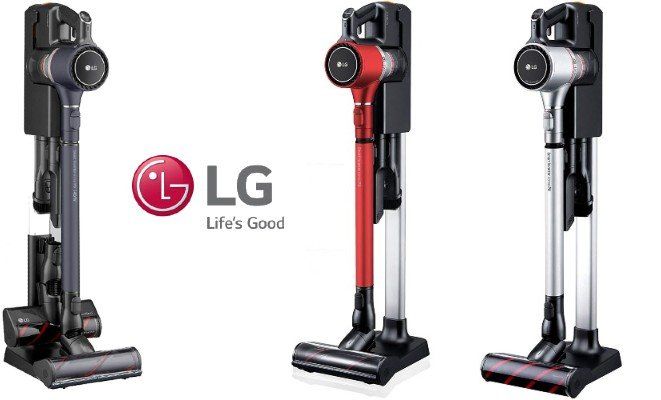
LG CordZero Handstick Vacuums: Complete 2026 Review & Buyer's Guide
A guide to LG's CordZero handstick vacuums. Compare the All in One, Kompressor and single-battery models on LG's published specs, with buying recommendations.
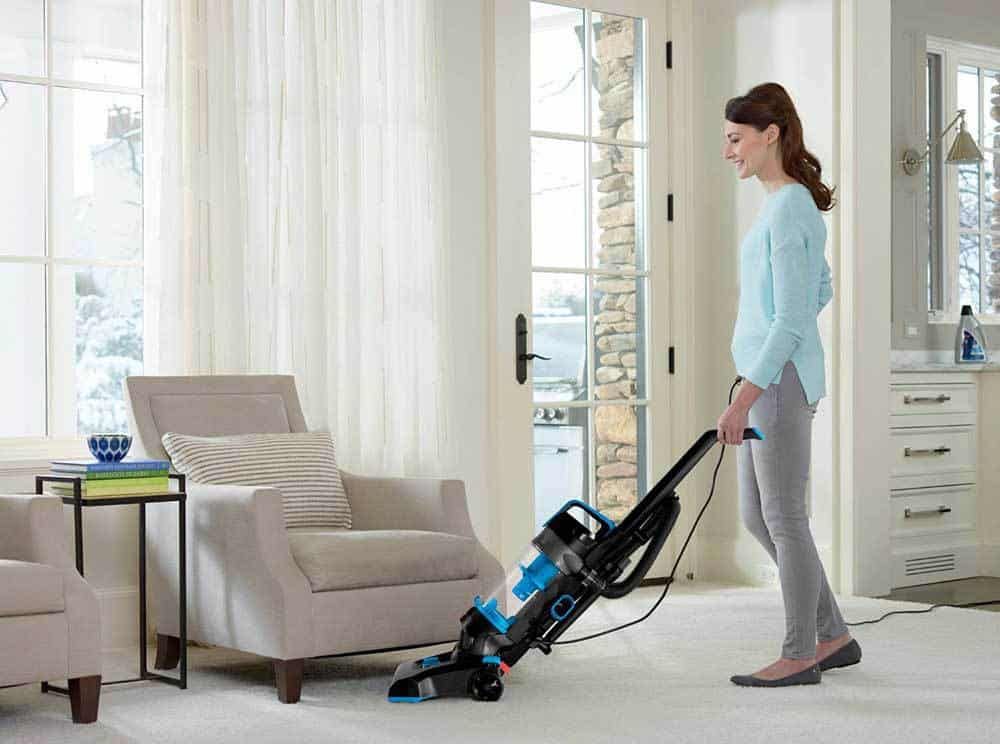
Bissell Powerforce Helix Review 2026 – Best Budget Upright Vacuum?
Bissell Powerforce Helix review for 2026. Is this budget upright vacuum worth buying? Updated specs, pricing, and alternatives compared.
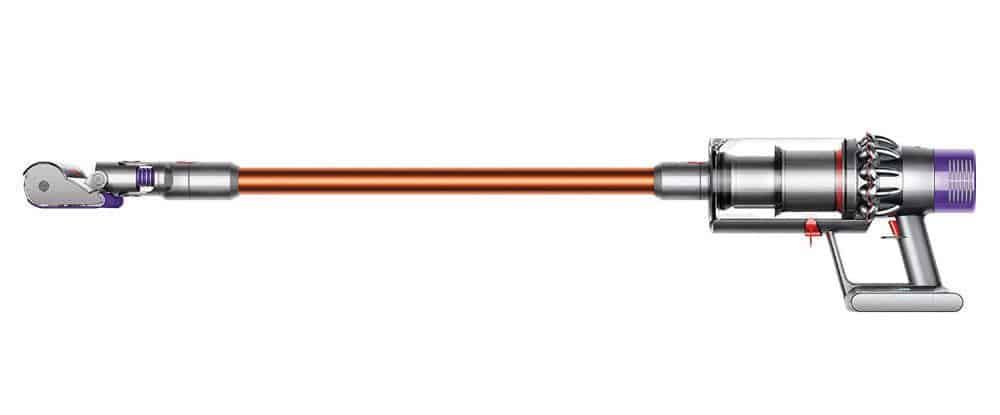
Dyson V10 Review 2026 – Still Worth Buying or Upgrade to V15?
A 2026 look at the Dyson Cyclone V10. Is this 8-year-old cordless vacuum still worth buying, or should you upgrade to the V15 or Gen5? We compare Dyson's published specs against the newer models.