Affiliate Disclosure:Home Vacuum Zone is reader-supported. When you buy through links on our site, we may earn an affiliate commission at no additional cost to you. This does not influence our reviews or recommendations — we only recommend products we genuinely believe in.
Dyson rolled out the Clean+Wash Hygiene in March 2026 as the official upgrade to the WashG1, and now there are two near-identical-looking wet floor cleaners on the shelf with a couple of hundred dollars between them. Both are filter-free. Neither does carpet. The microfibre rollers and counter-rotating tech are basically the same hardware story. So what’s actually different?
Quite a lot, once you stop reading the marketing.
I’ve spent time with both and there’s a clear winner for most homes, but it isn’t a clean sweep. Here’s the head-to-head.
Quick Verdict
The Clean+Wash Hygiene is the better buy for most people. The hot-air drying dock alone solves the WashG1’s biggest weakness, which is the roller staying damp between cleans and starting to smell after a couple of weeks. It’s also lighter, runs roughly twice as long per charge, and the denser roller pulls dried-on stains in fewer passes.
But the WashG1 isn’t dead. It still has noticeably bigger water tanks, which matters more than you’d expect in a larger home. If you’re cleaning more than about 1,800 square feet of hard floor in one session, the Clean+Wash will need a refill mid-job and the WashG1 won’t.
If you already own a WashG1 and it’s working fine, don’t trade up. The hygiene improvements are real but they’re not worth replacing a functioning machine. New buyer? Get the Clean+Wash unless you have a specific reason to want the bigger tank.
Spec Comparison At A Glance
| Specification | Dyson WashG1 | Dyson Clean+Wash Hygiene |
|---|---|---|
| Weight | 10.5 lbs (4.9 kg) | 8.4 lbs (3.82 kg) |
| Runtime | Up to 35 min | Up to 70 min |
| Clean water tank | 1.0 L | 0.75 L |
| Dirty water tank | 0.8 L | 0.52 L |
| Coverage per fill | 3,100 sq ft | 3,770 sq ft |
| Roller density | 64,800 filaments/cm² | 84,000 filaments/cm² |
| Hair-pickup bristles | Secondary brush bars | 1,400 embedded in main roller |
| Hot-air drying | No | Yes, 30 min at 185°F |
| Filter | Filter-free | Filter-free |
| Self-clean cycle | 140s flush | 145s flush + 30 min hot-air |
| Noise | ~60 dB | ~63 dB |
| Charge time | 4 hr | 4.5 hr |
| Lie-flat clearance | 4.4 inches | 4.4 inches |
| Floor types | Hard floors only | Hard floors only |
A few of those rows hide more than they show. Let’s break the meaningful ones down.
What’s Actually New On The Clean+Wash Hygiene
Four real upgrades. None of them are spec-sheet padding.
The drying dock. When you park the Clean+Wash on its base after cleaning, it runs a 145-second self-clean flush, then blows hot air at 85°C (185°F) over the roller for 30 minutes. Roller dries properly between uses. By contrast, the WashG1’s flush cycle leaves the roller wet, and unless you remember to pop it out and air-dry it, you’ll get a damp-laundry smell after a few weeks of use. Anyone who’s owned the WashG1 for any real length of time knows the routine.
A denser roller. 84,000 filaments per square centimetre on the Clean+Wash, against 64,800 on the WashG1. That’s a 30% increase in microfibre density, plus 1,400 nylon bristles embedded directly into the roller for hair pickup. The WashG1 has nylon bristles too, but they sit on separate secondary brush bars behind the main rollers. In practice the Clean+Wash lifts dried-on coffee, juice, and sticky kid mess in fewer passes because the bristles are doing their job in the same physical contact zone as the microfibre.
Twice the runtime. Up to 70 minutes on the Clean+Wash versus 35 on the WashG1. Most people won’t ever clean for 70 minutes straight, but the practical effect is that you can clean a full house, plus the kitchen, plus the bathroom floor, all in one go and still have charge left over. The WashG1 wants to come back to its dock after every decent session.
It’s lighter. 8.4 lbs vs 10.5 lbs. Doesn’t sound like much on paper. After fifteen minutes of pushing it around your wrist disagrees, especially if you’re working in tight angles or moving between rooms.
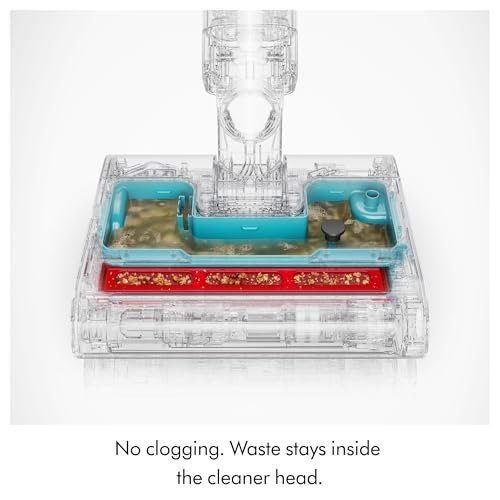
The other thing worth flagging, because Dyson’s marketing is a bit slippery here: the Clean+Wash Hygiene is filter-free, but so is the WashG1. The PR copy implies “no unhygienic filter” is a Clean+Wash-specific feature, but the WashG1’s design also avoids a filter. A spigot closes the air valve so the motor never sees water, no filter required. Both machines are filter-free. The hygiene difference between them is in the drying, not the filter.
Where The WashG1 Still Has The Edge
It’s not a one-sided win.
Bigger tanks. The WashG1’s 1.0 L clean tank and 0.8 L dirty tank are noticeably larger than the Clean+Wash’s 0.75 L and 0.52 L. Yes, the Clean+Wash claims more coverage per fill (3,770 vs 3,100 sq ft) thanks to the more efficient roller, but if you’re cleaning a 2,000+ sq ft house with kitchens, bathrooms, and a hallway in one session, you’ll be refilling the Clean+Wash partway through and emptying its dirty tank more often. For larger homes the maths flips.
Faster charging. 4 hours versus 4.5. Marginal, but worth noting if you’re the sort who runs the battery flat and wants it back up overnight.
Slightly quieter. ~60 dB on the WashG1, ~63 dB on the Clean+Wash. Both are quiet for floor cleaners. If you’re cleaning while a baby naps or someone’s on a call, the difference might matter.
Two years of testing behind it. The WashG1 has been on shelves since 2024, with thousands of hours of real-world use across reviewers and owners. By contrast, the Clean+Wash only launched in March 2026. Early reviews are strong, but if you want a product whose long-term reliability is documented, the WashG1 has the longer track record.
That’s roughly it. The WashG1’s positioning is also more competitive now that the Clean+Wash has taken the flagship slot, so deals on it tend to surface more often than they did at launch.
Hot-Air Drying Is The Real Story
This deserves its own section because it’s the actual reason to upgrade.
The WashG1 runs a 140-second self-clean cycle. That’s a flush, basically. Clean water runs through the roller and out into the dirty tank, taking the gunk with it. The roller is then clean. It’s also wet. If you pop it back into the dock and walk away, it stays wet, and after a few cycles you start to get bacterial growth on the roller, mould around the seals, and that distinctive damp-laundry smell. You can manually pull the roller out and air-dry it, and Dyson recommends you do, but most people don’t.
The Clean+Wash Hygiene fixes this without asking you to remember anything. After the 145-second flush, the dock blows 85°C hot air over the roller for half an hour. By the time you next pick the machine up, the roller is bone dry and odour-free. Bacteria don’t grow on dry surfaces. Mould doesn’t either.
This is what Dyson means by “hygiene.” Their filter-free claim is true but not unique to this model. Hot-air drying is the actual differentiator, and it’s genuinely the difference between a wet floor cleaner you’re still using cheerfully a year later versus one you’ve quietly replaced with a steam mop because it stinks.
If hygiene is your main concern, the upgrade is worth it. If it isn’t, the rest of the differences are smaller.
Real-World Performance Differences
Both machines clean roughly the same kinds of mess to roughly the same standard. Coffee spills, juice from a knocked-over kid’s cup, mud tracked in from the garden, the kitchen floor after dinner. Where they actually diverge:
Dried-on stains. The Clean+Wash’s denser roller and 250 RPM rotation pulls these up in fewer passes. With the WashG1 you’ll go over the same spot two or three times. On dried tomato sauce or yesterday’s coffee splash, the Clean+Wash is genuinely faster.
Edges and skirting. Both machines struggle with corners and skirting boards. Early reviews of the Clean+Wash flag asymmetric edge cleaning where one side reaches closer to walls than the other. The WashG1 is more symmetric but neither machine clears the last centimetre. You’ll still need a cloth or a steam mop for proper skirting work.
Hair pickup. The Clean+Wash’s embedded nylon bristles tackle hair more effectively in a single pass. On the WashG1, the bristles sit on secondary brush bars behind the main rollers, so hair sometimes wraps around the roller before the bristles can dislodge it. Long-haired pet owners will notice the difference.
Carpet. Neither machine touches carpet. Both are hard-floor only. If you need carpet cleaning, you’re looking at a different category of product entirely.
Transitions between rooms. The Clean+Wash can drip waste water when you pick it up to move between rooms. Reviewers have flagged this as a quirk of the Hygiene model’s reservoir geometry. The WashG1 doesn’t have the same complaint.
Sticky messes. Honey, syrup, the aftermath of a smoothie disaster. Both handle these but the Clean+Wash’s hot-air drying afterwards means the roller doesn’t sit in a slightly sweet bacterial soup overnight.
Maintenance and Consumables
Worth a quick word because both machines have ongoing costs.
Microfibre rollers wear out. Dyson recommends replacement around the six-month mark with regular use, and they’re not cheap. Replacement rollers for the Clean+Wash cost more than the WashG1’s, but the upgrade pricing isn’t dramatic.
Both machines have a tray under the dock that catches the flush cycle’s overflow. You’ll empty this every couple of weeks. Both also have removable dirty-water tanks that need a rinse after every clean, which is a 20-second job.
Beyond that, the Clean+Wash’s drying dock genuinely reduces maintenance. You don’t need to remember to pull the roller out to air-dry it. The dock handles it. For households where “low-maintenance” is a feature rather than a marketing word, that matters.
Who Should Buy The Clean+Wash Hygiene
Pretty much anyone buying their first Dyson wet cleaner today, with a few specific use cases:
- Apartments, townhouses, or single-floor homes with under 1,800 sq ft of hard floor
- Anyone with kids, pets, or both, where dried-on mess is a daily fact of life
- People who hated cleaning the rollers manually on the WashG1, or who’ve heard the horror stories from friends who own one
- Long-haired pet owners (the embedded bristles really do work better)
- Buyers who want the latest design and don’t mind paying for it
The drying dock is the headline feature and it’s worth the premium for most households.
Read the full Clean+Wash Hygiene review for the deep-dive on testing, build quality, and what the dock actually looks like in your kitchen.
Who Should Pick The WashG1 Instead
Three reasonable cases:
- Bigger homes. If you’re cleaning 1,800+ sq ft of hard floor in a single session, the WashG1’s larger tanks save you a refill stop or two. For larger homes the bigger tanks aren’t a small thing.
- Existing WashG1 owners. If your current WashG1 is working, don’t upgrade. The Clean+Wash is better, but not “throw real money at it” better. Your future replacement decision is a different conversation.
- Buyers chasing a deal. Retail pricing on the WashG1 has come down since the Clean+Wash launched. If you can find a deal, the WashG1 still does most of what the Clean+Wash does for less.
Read the full WashG1 review for the testing details, real-world battery life, and the long-term ownership experience.
Considering The PencilWash Too?
If you’ve also been looking at the PencilWash (the lightweight cordless one), the picture changes again. The PencilWash is a different category of tool, more of a quick-spill cleanup wand than a whole-house cleaner. If you’re weighing all three options, the 3-way comparison walks through every scenario.
For broader context on how Dyson’s wet cleaners stack up against other types of wet floor cleaners, like steam mops, traditional wet/dry shop vacs, and robot mops, the category overview is the place to start.
Bottom Line
Buy the Clean+Wash Hygiene unless you’ve got a bigger home or a working WashG1 already. The hot-air drying dock is the genuine reason to pay more, and it’s the kind of design fix you stop noticing precisely because it removes a problem you used to have to manage. WashG1 was good. Clean+Wash is better in the ways that actually matter day-to-day, and it does the boring hygiene maintenance for you.
Head-to-Head Comparison
Detailed Reviews
Dyson Clean+Wash Hygiene Wet and Dry Floor Cleaner
Best for most homesA genuinely hygienic wet and dry floor cleaner that cleans brilliantly and fixes the WashG1's biggest flaw with its hot-air drying dock, though the small tanks and premium price tag warrant consideration against larger-capacity competitors.
What We Like
- Genuinely hygienic filter-free design where dirty water never travels through the machine body
- Excellent cleaning performance on coffee, wine, mud, and mixed wet and dry messes
- Very quiet operation at approximately 63 dB
- Lightweight at 8.4 lbs with 4.4-inch flat profile for under-furniture cleaning
- Hot-air drying dock eliminates manual roller drying and prevents odour buildup
What We Don't
- Small tank capacities (0.75L clean, 0.52L dirty) require frequent refills in larger homes
- Edge cleaning imperfect on one side, doesn't reach flush to walls
- Can drip waste water when moving between rooms
Dyson WashG1 Wet Floor Cleaner
Best for larger spacesThe Dyson WashG1 delivers impressive wet cleaning on smooth hard floors with near-silent operation and minimal effort, but its inability to handle carpets, grout lines, or tight spaces limits it to homes with predominantly smooth flooring.
What We Like
- Excellent cleaning on smooth hard floors with dual counter-rotating microfibre rollers
- Floors dry quickly without streaks thanks to minimal moisture left behind
- Quiet operation at approximately 60 dB, significantly quieter than standard vacuums
- Lightweight and manoeuvrable at 10.5 lbs with easy edge-to-edge reach
- Effective 140-second self-cleaning cycle keeps rollers and internals fresh
What We Don't
- Cannot clean carpets at all, exclusively a hard-floor device
- Struggles with uneven floors and grout lines on textured tile
- Bulky head won't fit under low furniture or into tight corners
- Rollers need replacing every six months as an ongoing consumable cost
Sources & Research
Continue Reading
Explore more wet & dry vacuums content or browse our other categories.
Frequently Asked Questions
- What's the actual difference between the WashG1 and Clean+Wash Hygiene?
- Four real upgrades on the Clean+Wash Hygiene: a hot-air drying dock that dries the roller at 185°F for 30 minutes after each clean, a 30% denser microfibre roller (84,000 vs 64,800 filaments per cm²) with 1,400 nylon bristles embedded for hair pickup, roughly twice the runtime (up to 70 minutes vs 35), and a lighter body (8.4 lbs vs 10.5 lbs). Both are filter-free, both clean only hard floors, and both use counter-rotating rollers. The drying dock is the standout difference.
- Is the Clean+Wash Hygiene worth the upgrade from a WashG1?
- If you already own a working WashG1, no. The hygiene improvements are real but not worth replacing a functioning machine for. If you're buying new today, yes for most people. The hot-air drying solves the WashG1's biggest weakness, which is the roller getting damp and starting to smell after a couple of weeks of use. The exception is bigger homes (over about 1,800 square feet of hard floor) where the WashG1's larger tanks save you a refill stop.
- Does the Dyson WashG1 have a hot-air drying dock?
- No. The WashG1 has a 140-second self-clean flush cycle that rinses the roller, but no heated drying. After cleaning, the roller stays wet between uses unless you manually pull it out to air-dry. Only the Clean+Wash Hygiene has the 30-minute hot-air drying at 185°F.
- Are both Dyson wet cleaners filter-free?
- Yes, both. The WashG1 uses a spigot that closes the air valve so the motor never touches water, removing the need for a protective filter. The Clean+Wash Hygiene also has no filter and isolates dirty water in the cleaner head. Dyson's marketing on the Clean+Wash leans heavily on the filter-free angle, but it's not actually a difference between the two machines. The hygiene difference is the hot-air drying, not the filter.
- Can either machine clean carpet?
- No. Both the WashG1 and Clean+Wash Hygiene are hard-floor only. They work on tile, vinyl, laminate, and sealed hardwood. For homes with mixed flooring, you'll need a separate vacuum or a wet-dry vacuum that does both.
Written By
Home Vacuum Zone
Our team researches, tests, and reviews vacuum cleaners to help you make confident buying decisions.
Related Articles
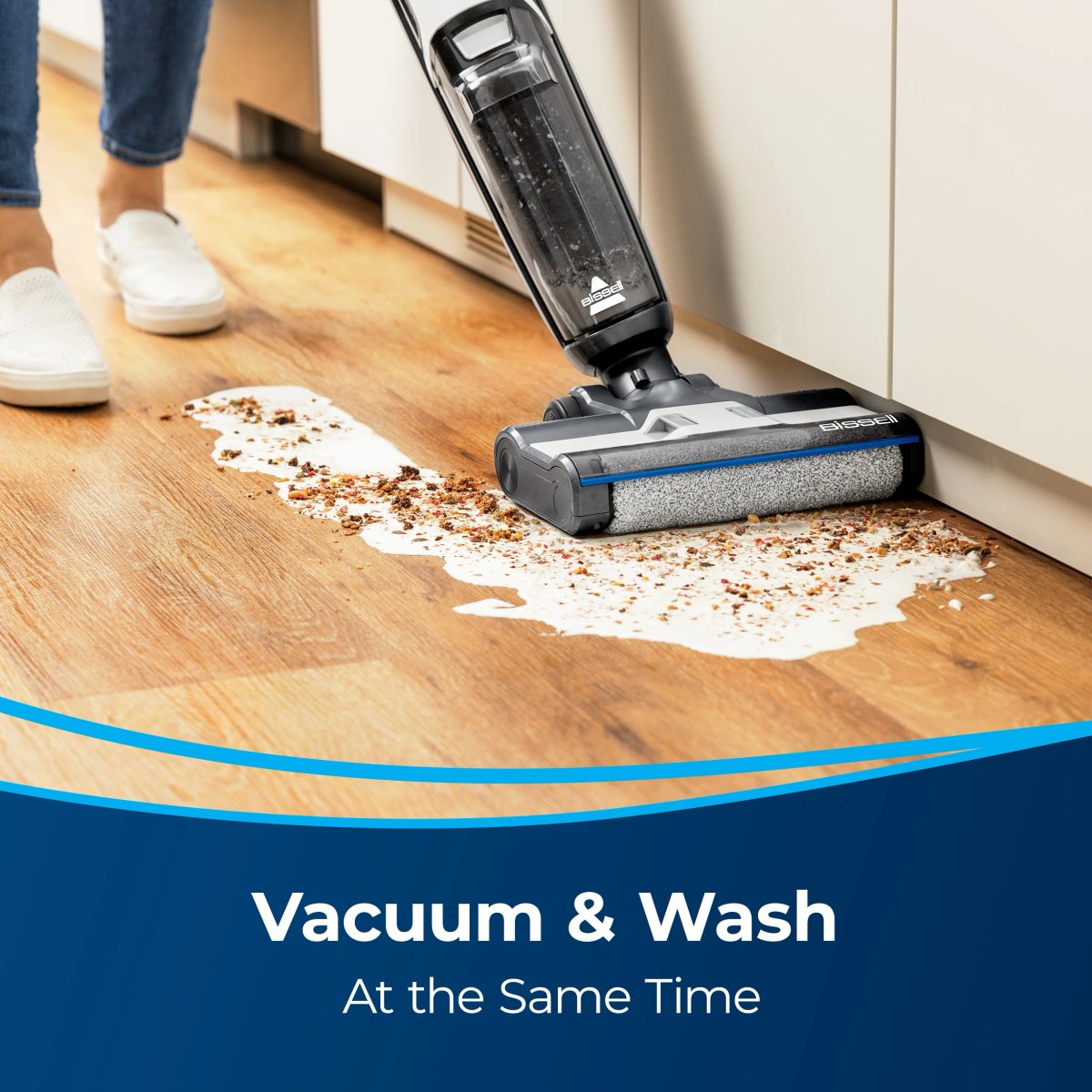
Bissell CrossWave HF3 Review: Vacuum and Mop in One
We tested the Bissell CrossWave HF3 cordless wet/dry vacuum. Read our review of simultaneous vacuuming and mopping performance on hard floors and area rugs.
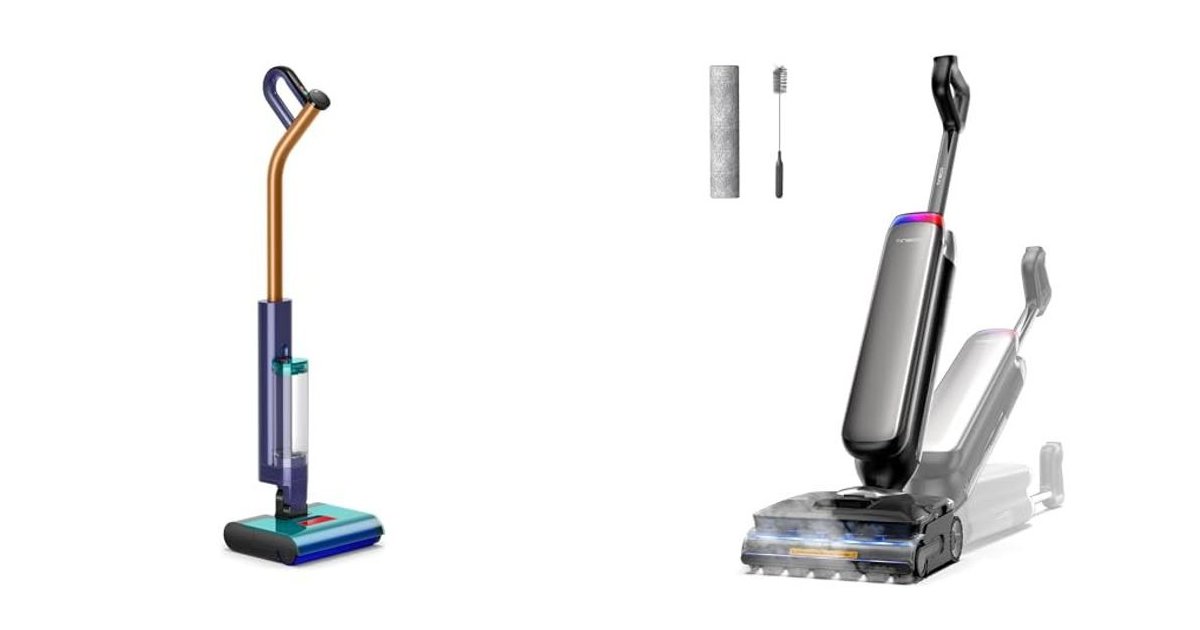
Dyson vs Tineco Wet Dry Vacuum: Which Brand Wins in 2026?
Dyson and Tineco take completely different approaches to wet dry floor cleaning. We compare their flagships, mid-range options, and brand philosophies to help you pick the right wet mop vacuum.
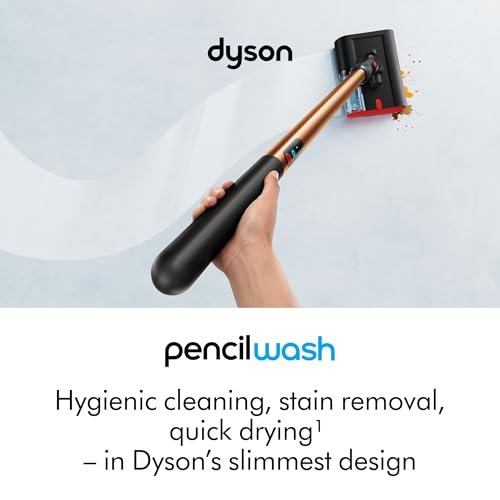
Dyson PencilWash Review: Lighter Than a Broomstick
Hands-on Dyson PencilWash review covering the ultra-light wet floor cleaner's real performance, battery life, and the trade-offs Dyson made to hit 4.6 lbs.