Affiliate Disclosure:Home Vacuum Zone is reader-supported. When you buy through links on our site, we may earn an affiliate commission at no additional cost to you. This does not influence our reviews or recommendations — we only recommend products we genuinely believe in.
If you walked into Best Buy last month and asked a sales assistant for a wet floor cleaner, you’d probably be shown five different machines that don’t really do the same job. A Dyson PencilWash. A Tineco Floor ONE. A Bissell PowerFresh steam mop. A Bissell CrossWave. And, depending on where you were standing, possibly a Craftsman shop vac.
All five get described as wet floor cleaners by somebody. None of them clean floors the same way.
That confusion has got a lot worse since Dyson piled into the category in 2024 with the WashG1, then doubled down in March 2026 with the PencilWash and Clean+Wash Hygiene. Searches for “Dyson wet dry vacuum” are up 900% year-on-year. The product is everywhere, but most coverage assumes you already know what kind of machine you’re looking at. You probably don’t.
Here’s the actual taxonomy.
Five Categories That All Get Called Wet Floor Cleaners
Hard-floor wet cleaning splits five ways once you start poking at the spec sheets. Each category solves a different problem. None replaces the others.
- Steam mops: heat plus a microfibre pad. No rollers, no suction. Sanitise sealed hard floors with 212°F+ steam.
- Wet floor cleaners (roller-only): Dyson’s WashG1, PencilWash, and Clean+Wash Hygiene. Dense microfibre rollers scrub with cold water, but there’s no vacuum motor, so you sweep first.
- Wet dry vacuums: Tineco, Dreame, Roborock, Shark, Bissell. Roller plus suction, vacuums and mops together in one pass.
- Steam wet dry vacuums: the Tineco Floor ONE S9 Artist Steam is the only mainstream one. Wet dry vacuum plus genuine 210°F steam during the cleaning pass.
- Shop vacs: Craftsman, DeWalt, Ridgid, Karcher WD line. Heavy-duty canister vacuums for garages, workshops, and water cleanup. Don’t mop.
Steam mops
The original wet floor cleaner. A small water tank, a heating element, a microfibre pad, and that’s about it. Push it across the floor and it puffs out steam at around 212°F to 250°F. The heat softens dirt, the pad picks it up. No rollers, no suction, no detergent.
Examples: Bissell PowerFresh Steam Mop 1940, Shark Steam Pocket Mop S3501.
What they’re good at: sanitisation. Steam at that temperature kills 99.9% of common bacteria and dust mites without any chemicals, which matters in homes with crawling babies, pets that lick the floor, or anyone with allergy issues. They’re light (around 5-6 lbs), genuinely cheap, and ready in 30 seconds.
What they don’t do: pick anything up. You sweep first, you steam-mop second, and any dry debris that’s still on the floor will bunch up under the pad. They also dispense no clean water in the conventional sense, which means anything sticky usually needs a back-and-forth to break it down. And on unsealed timber or laminate with vulnerable seams, the heat and moisture can cause damage if you linger.
We have a deeper steam mop vs wet dry vacuum write-up that goes into the trade-offs in detail, plus a best steam mop for hardwood floors roundup if a steam mop is what you actually want.
Wet floor cleaners (roller-only, no suction)
This is the new category Dyson has created. A motorised microfibre roller, a clean water tank, a dirty water tank, and zero suction motor.
Examples: Dyson WashG1, Dyson PencilWash, Dyson Clean+Wash Hygiene.
The roller spins fast, the machine drips clean water onto it, the wet roller scrubs the floor, and the dirty water gets squeezed off into a separate tank. There’s no vacuum involved at any point. The Clean+Wash Hygiene’s name confuses people because it says “Wet and Dry Floor Cleaner”, but Dyson doesn’t publish a suction figure for it and reviewers confirm there’s no vacuum motor inside. Same as the WashG1 and PencilWash.
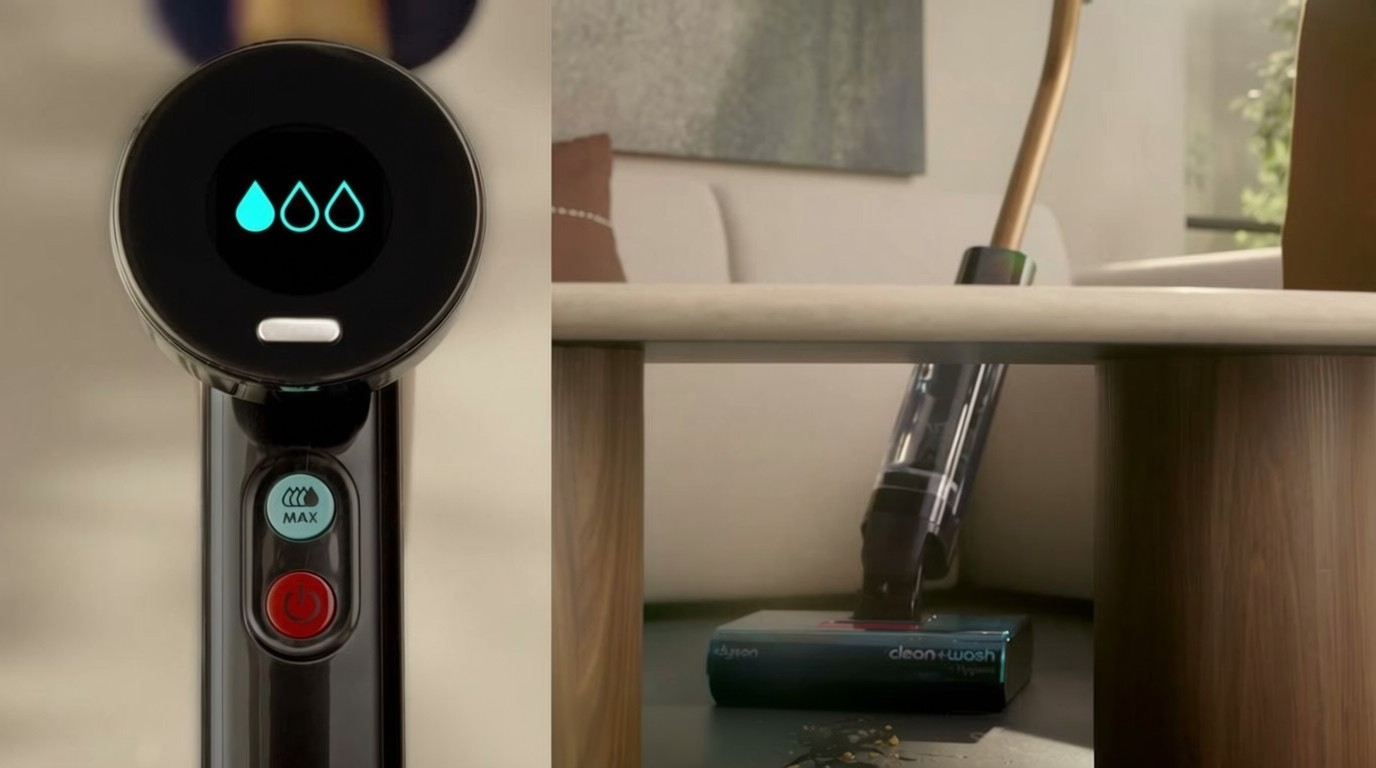
That’s not a flaw, it’s the design philosophy. Dyson’s argument is that mixing dirty water with vacuumed dust creates a hygiene problem inside the machine: damp tubes grow biofilm, filters go off, the dirty water tank starts to smell within a few weeks. The Clean+Wash Hygiene takes that further with a 30-minute hot-air drying cycle at 185°F that kicks in after each clean to dry the rollers and prevent musty smells.
The catch is the two-step routine. You have to vacuum or sweep your floors first, then come through with the wet roller for the wash. A Cheerio that’s sitting on your kitchen tile will still be there after you’ve run a WashG1 over it. For some people that’s fine, especially if you already own a decent stick vac. For others it’s a non-starter.
If you’re considering Dyson’s lineup specifically, the PencilWash vs WashG1 vs Clean+Wash Hygiene comparison breaks down which one to buy.
Wet dry vacuums (roller plus suction)
What most people think of when someone says “wet dry vacuum” in 2026. A motorised roller scrubs the floor, a vacuum motor sucks up the dirty water and any dry debris in the same pass.
Examples: Tineco Floor ONE S7 and S9, Dreame H14 Pro, Roborock Dyad Pro Combo, Shark HydroVac XL, Bissell CrossWave HF3.
Suction figures range from 17,000 Pa on the Roborock up to 22 kPa on the Tineco S9, with the Dreame H14 Pro at 18,000 Pa. Those numbers look big but they’re nothing like a stick vacuum’s headline figures. Wet dry vacuums use suction primarily to extract dirty water and lift wet debris, not to deep-clean carpet.
The big advantage is the one-pass workflow. Spilled cereal in milk on the kitchen floor? One pass, gone. Muddy paw prints in the hallway? Same. You don’t sweep, you don’t pre-vacuum, you don’t change tools mid-job. For households with kids or pets, this is genuinely the time-saver everyone says it is.
Most of these run cold water for the cleaning. The exception is the Dreame H14 Pro, which heats its cleaning water to 140°F as part of the wash. That’s hot enough to dissolve grease faster than cold water and prevents some of the smell issues you get with cold-water systems, but it’s not steam. You won’t see steam coming off the head and it won’t sanitise the way a steam mop does.
For a full lineup, our best wet dry vacuums for 2026 covers the eight strongest models on the market right now.
Steam wet dry vacuums (roller plus suction plus actual steam)
The newest sub-category and a small one. A wet dry vacuum that also generates steam during the cleaning pass. Heated cleaning water plus suction plus rollers, all in one machine.
The only one I’d point at right now is the Tineco Floor ONE S9 Artist Steam. It hits 320°F internally and delivers steam at the outlet at 210°F, which is genuinely hot enough to kill bacteria the same way a steam mop does. You also get 22 kPa of suction and the rest of the wet dry vacuum kit.
Brilliant on dried-on stains. Toothpaste, soy sauce, dried porridge, the kind of mess where a normal wet dry vacuum needs three passes and you still get residue. The S9 melts that off in one go.
What you pay for it is the flagship-tier price and the runtime hit. In Steam mode the battery lasts about 30 minutes versus 75 minutes in Eco. So you’re using steam strategically, not for every clean. The other downside is weight (13.5 lbs), though the SmoothDrive self-propulsion takes most of that off your wrist.
I’ve seen the Dyson Clean+Wash Hygiene get listed as a steam wet dry vacuum and it isn’t. Its 185°F heat is the post-clean hot-air drying cycle for the rollers, not the cleaning pass. Easy mistake to make based on the marketing. It’s a roller-only wet floor cleaner with a smart drying dock.
If you’re weighing the steam version against the standard Tineco lineup or the Dreame H14 Pro, the Dyson vs Tineco wet dry vacuum comparison covers the cross-brand decisions.
Shop vacs
The original wet/dry vacuum, in the literal sense. Heavy plastic drum, casters, big hose, mains-powered motor that sounds like a small leaf-blower. Sucks up water, sawdust, drywall dust, screws, broken glass, spilt paint, basically anything short of furniture.
Examples: Craftsman 16-gallon, DeWalt DXV10P, Ridgid WD4080, Karcher WD series.
Different machine entirely. No mopping. No clean water. No scrubbing roller. They suck up wet stuff and dry stuff with brute-force suction, then you empty the drum into a bin. Built for garages, workshops, and disaster cleanup, not daily kitchen maintenance. They’re loud (80-90 dB), heavy (15-25 lbs), and corded.
The naming overlap is unfortunate but it’s been around for decades. “Wet/dry vac” and “wet dry vacuum” sound like the same product. They’re not. Search results bunch them together and people end up buying the wrong one all the time.
We’ve got the full breakdown in our wet dry vacuum vs shop vac guide, plus a best shop vac roundup if you genuinely need one of these for your garage.
Quick Reference Table
The fastest way to see what each category actually does:
| Type | Suction? | Heat? | Rollers? | Pre-sweep? | Picks up dry debris? | Best for |
|---|---|---|---|---|---|---|
| Steam mop | No | Yes (212°F+) | No | Yes | No | Sanitising sealed hard floors |
| Wet floor cleaner (Dyson) | No | Drying only (Clean+Wash) | Yes | Yes | No | Hygienic wet clean of pre-swept floors |
| Wet dry vacuum | Yes | Cold (Dreame: 140°F water) | Yes | No | Yes | One-pass vacuum and mop, daily homes |
| Steam wet dry vacuum | Yes | Yes (210°F outlet) | Yes | No | Yes | Tough stains plus daily mop, mixed floors |
| Shop vac | Yes (high) | No | No | N/A | Yes (heavy debris) | Garages, workshops, water cleanup |
The “pre-sweep” column is the one most people miss when they’re shopping. It’s the practical difference between a Dyson Clean+Wash Hygiene and a Tineco Floor ONE. Same form factor, similar weight, similar price bracket. But one of them needs you to sweep first and the other doesn’t.
Which One Is Right for Your Home?
Forget the brand names for a moment. Match the machine to the actual job.
Small flat or studio, mostly hard floors, tight on storage. A Dyson PencilWash if you want minimal weight and don’t mind hand-rinsing the roller. Or a Bissell PowerFresh Steam Mop if you’d rather sanitise without buying detergent. Both fit in a cupboard, both are under 7 lbs.
Family home, mixed mess, kids and pets. A wet dry vacuum with suction. The Dreame H14 Pro if you want hot-water cleaning at a sensible midrange price. The Roborock Dyad Pro Combo if 5-in-1 versatility matters and you want handheld vacuum capability built in. The Bissell CrossWave HF3 if you want the cheapest cordless option that actually works on rugs as well as hard floors.
Sticky kitchen, dried-on stains, you cook a lot. The Tineco Floor ONE S9 Artist Steam. The steam function is the difference between a single pass and three. It sits at the flagship tier, but if you’d actually use the steam mode regularly it earns its keep.
Hygiene is the priority, you already own a vacuum. A Dyson Clean+Wash Hygiene. The hot-air drying dock prevents the musty smell that affects every other wet dry machine after a few months. Filter-free design means dirty water never travels through the body. You will need to keep using your existing vacuum for dry debris though.
Garage, workshop, or you’ve just had a leak. A shop vac, no question. None of the floor washers will help you here. Get a Craftsman or a Ridgid in the 10-16 gallon range and stop trying to make a Tineco do a job it wasn’t built for.
You want one machine to do everything. Doesn’t exist. Anyone telling you otherwise is selling something.
Why “Wet Floor Cleaner” Means Five Different Things
This whole mess is mostly Dyson’s fault, and I say that as someone who likes their lineup.
Until 2024, the wet/dry vacuum category was settled. Tineco invented the modern format in 2018, Bissell had been doing CrossWaves for years, Dreame and Roborock arrived with their own takes, and “wet dry vacuum” reliably meant a cordless stick that vacuumed and mopped together. Steam mops were their own thing. Shop vacs were their own thing. Three lanes, no real overlap.
Then Dyson launched the WashG1 in 2024 with no suction motor and called it a wet floor cleaner. Marketing-wise, that decision is defensible: it differentiates Dyson’s machine from a Tineco. Practically, it’s confused everyone because “wet floor cleaner” had previously been used as a casual synonym for “wet dry vacuum”. Now retailers, reviewers, and customers all use the term to mean different things.
It got worse in March 2026. Dyson labelled the PencilWash a “Cordless Wet Floor Cleaner” but called the Clean+Wash Hygiene a “Wet and Dry Floor Cleaner”, even though the spec sheet shows the same roller-only architecture and zero suction in both products. Same product family, two different category labels, neither of them lining up with how Tineco or Dreame use the same words. They’re not making it easier.
Add steam mops on one end, shop vacs on the other, and the umbrella term “wet floor cleaner” now covers five distinct product categories that share a few words but very little engineering.
The lesson, and this is genuinely the best filter I can offer when you’re shopping: ignore the marketing label, read the spec sheet. Three numbers tell you everything you need.
- Does it have suction? If yes, it’s a wet dry vacuum or a shop vac. If no, it’s a wet floor cleaner or a steam mop.
- Does the heat figure refer to cleaning or drying? Cleaning heat means steam mop or steam wet dry vacuum. Drying heat means hygiene-focused wet floor cleaner. Cold means standard wet dry vacuum.
- Does it pick up dry debris in the same pass? If yes, no pre-sweep needed. If no, you’re keeping your vacuum.
Three questions, five categories, decision made.
Before You Buy
Three checks worth doing on the spec sheet of any wet floor cleaner before you commit. Skip these and you’ll end up annoyed.
Tank capacities matter more than runtime numbers. Most wet dry vacuums have a clean water tank between 0.3 and 1 litre. The smaller end, like the Dyson PencilWash at 0.3L, will need refilling every few rooms. Fine for a flat. Painful for a 2,500 sq ft house. Match the tank to your floor area and you’ll save yourself a lot of trips to the sink.
Self-cleaning is non-negotiable for anything you’ll use weekly. Wet machines develop biofilm and stink within a month if you’re hand-rinsing rollers and tanks. Look for a flush cycle at minimum, hot-air drying ideally. The Dyson Clean+Wash Hygiene’s 185°F drying cycle and the Tineco S9’s FlashDry are the gold standard right now. Anything without auto-drying is going to need babysitting.
Lay-flat clearance gets ignored more than it should. Manufacturers love quoting the angle (170°, 180°), but the number that actually matters is the clearance in inches. The Dyson PencilWash and Dreame H14 Pro both get under 4 inches, which means they’ll fit under most low sofas and bed frames. The Roborock Dyad Pro Combo at a 3-inch cleaning head height is probably the best of the wet dry vacuums for furniture access. If you’ve got a lot of low-clearance furniture, this number matters far more than total runtime or peak suction.
Get those three right and the category label on the box becomes much less important.
Recommended Products
Dyson Clean+Wash Hygiene Wet and Dry Floor Cleaner
Best for hygieneA genuinely hygienic wet and dry floor cleaner that cleans brilliantly and fixes the WashG1's biggest flaw with its hot-air drying dock, though the small tanks and premium price tag warrant consideration against larger-capacity competitors.
What We Like
- Genuinely hygienic filter-free design where dirty water never travels through the machine body
- Excellent cleaning performance on coffee, wine, mud, and mixed wet and dry messes
- Very quiet operation at approximately 63 dB
- Lightweight at 8.4 lbs with 4.4-inch flat profile for under-furniture cleaning
- Hot-air drying dock eliminates manual roller drying and prevents odour buildup
What We Don't
- Small tank capacities (0.75L clean, 0.52L dirty) require frequent refills in larger homes
- Edge cleaning imperfect on one side, doesn't reach flush to walls
- Can drip waste water when moving between rooms
Tineco Floor ONE S9 Artist Steam
Best overall wet dry vacuumThe best all-in-one hard floor cleaner available right now, combining vacuuming, mopping, and genuine steam cleaning in a single pass, but the $999 price tag only makes sense if you'll actually use the steam function regularly.
What We Like
- Best-in-class cleaning performance with 320°F steam that removes dried and stuck-on stains
- DualBlock anti-tangle system continuously removes hair from roller during operation
- Triple-sided edge cleaning reaches walls and corners from front and both sides
- Up to 75 minutes runtime in Eco mode covers large homes on a single charge
- 360-degree SmoothDrive self-propulsion makes the 13.5 lb weight manageable
What We Don't
- Premium pricing at $999 MSRP is hard to justify without regular steam use
- Heavy at approximately 13.5 lbs even with self-propulsion assistance
- Self-drying must be manually initiated rather than starting automatically when docked
- Steam mode cuts battery life to approximately 30 minutes
Dreame H14 Pro Wet Dry Vacuum
Best lie-flat designA strong all-rounder that punches above its price point with excellent dirt pickup, a genuinely useful 180-degree lie-flat design, and smart hot-water self-cleaning, but it leaves floors wetter than ideal.
What We Like
- Excellent cleaning performance rated 5/5 by Homes and Gardens
- True 180-degree lie-flat design cleans under furniture as low as 3.86 inches
- Hot water self-cleaning at 140°F prevents odours and mildew buildup
- Smart auto-dispensing solution tank adjusts detergent based on dirt level
- Lighter than competitors at 12.6 lbs with GlideWheel motorised drive assist
What We Don't
- Floors left noticeably wet and slippery after cleaning
- Roller brush stains and discolours after relatively little use
- No steam cleaning capability, limited to 140°F hot water
- Shorter 40-minute runtime compared to 75 minutes on the Tineco S9
Dyson WashG1 Wet Floor Cleaner
Best for smooth hard floorsThe Dyson WashG1 delivers impressive wet cleaning on smooth hard floors with near-silent operation and minimal effort, but its inability to handle carpets, grout lines, or tight spaces limits it to homes with predominantly smooth flooring.
What We Like
- Excellent cleaning on smooth hard floors with dual counter-rotating microfibre rollers
- Floors dry quickly without streaks thanks to minimal moisture left behind
- Quiet operation at approximately 60 dB, significantly quieter than standard vacuums
- Lightweight and manoeuvrable at 10.5 lbs with easy edge-to-edge reach
- Effective 140-second self-cleaning cycle keeps rollers and internals fresh
What We Don't
- Cannot clean carpets at all, exclusively a hard-floor device
- Struggles with uneven floors and grout lines on textured tile
- Bulky head won't fit under low furniture or into tight corners
- Rollers need replacing every six months as an ongoing consumable cost
Dyson PencilWash Cordless Wet Floor Cleaner
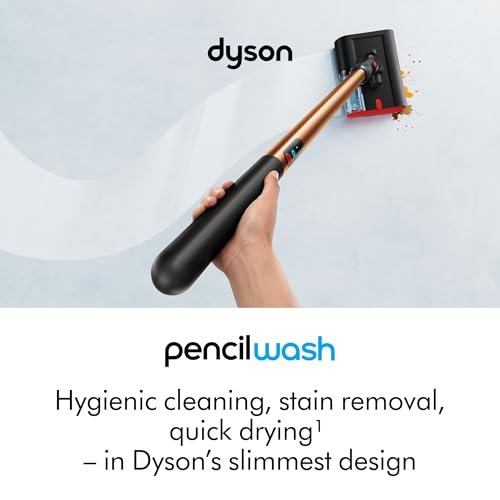
Best lightweightA remarkably slim and lightweight wet floor cleaner built for quick daily maintenance on hard floors in smaller homes, but the lack of suction and self-cleaning means it complements a vacuum rather than replacing one.
What We Like
- Exceptionally light at 4.6 lbs with just 0.8 lbs felt in hand during use
- Filter-free hygienic design with separate clean and dirty water tanks
- Very quiet operation with no suction motor noise
- 170-degree lay-flat angle gets under most furniture easily
- Affordable Dyson entry point at $349
What We Don't
- No self-cleaning mode, requires manual roller washing after every use
- Struggles with stubborn dried-on stains like mud and ketchup
- Cannot clean room edges effectively due to roller design
- Does not vacuum, won't pick up dry debris like crumbs or cereal
Roborock Dyad Pro Combo 5-in-1 Wet Dry Vacuum
Best 5-in-1 versatilityA highly capable 5-in-1 wet dry vacuum that excels at tackling sticky floor messes and offers genuine versatility through handheld conversion, but the thick cleaning head and shorter real-world battery life are notable compromises.
What We Like
- Excellent wet and dry cleaning handles sticky messes, cereal, and sauces with ease
- True 5-in-1 versatility with handheld vacuum conversion and multiple attachments
- Self-cleaning with hot-air drying at 122°F prevents odour buildup
- Auto-dispensing detergent in Auto mode adjusts to mess severity
- Triple-roller system with DirTect smart sensor for thorough cleaning
What We Don't
- Thick 3-inch cleaning head cannot fit under low furniture
- Notch between front rollers traps dirt and requires manual cleaning
- Real-world mopping runtime closer to 30 minutes in Max mode despite 60-minute claim
- Heavy at 14.1 lbs with some attachment connection points feeling fragile
Shark HydroVac XL 3-in-1 Vacuum Mop
Best budget optionA budget-friendly corded wet dry vacuum that delivers solid mop-and-vac convenience for hard floors, but the small tank, lack of a dry-vacuum-only mode, and mediocre edge cleaning limit its appeal for larger homes.
What We Like
- Genuine 3-in-1 convenience vacuums and mops hard floors in a single pass
- Effective self-cleaning cycle cleans roller and internal hoses
- Antimicrobial brushroll prevents odour and bacterial growth between uses
- Lightweight at approximately 10 lbs for a corded wet dry vacuum
- Corded design means consistent power with no battery degradation concerns
What We Don't
- No vacuum-only mode on hard floors, always dispenses cleaning solution
- Small 16.9 oz clean water tank requires frequent refills on larger areas
- Weak edge cleaning struggles in tight corners compared to competitors
- Suction noticeably weaker than dedicated stick vacuums
Bissell CrossWave HF3
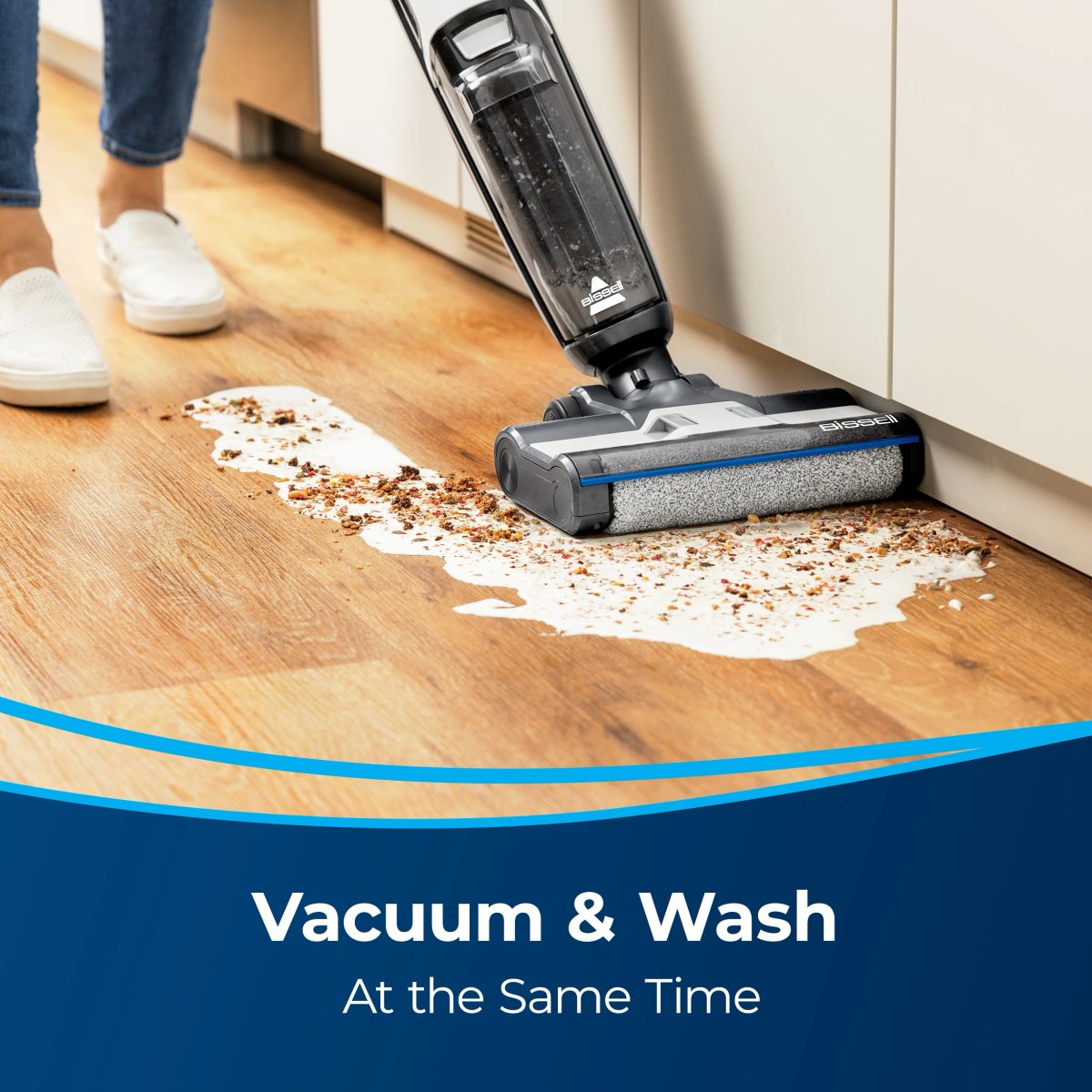
Best wet dry vacuumThe CrossWave HF3 combines cordless vacuuming and mopping in a single pass with its 3000 RPM brush roll and two-tank system that keeps clean water separate from dirty. Best for households with mostly hard floors who want to cut their cleaning routine in half without sacrificing floor hygiene.
What We Like
- Vacuums and washes simultaneously
- Multi-surface cleaning for hard floors and area rugs
- Two-tank system keeps clean and dirty water separate
- Cordless operation for enhanced mobility
What We Don't
- Requires Bissell cleaning solution
- Smaller clean water tank (17.6 oz) than some competitors
- Runtime limited by battery (about 30 minutes)
Bissell PowerFresh Steam Mop 1940
Best steam mop overallThe PowerFresh 1940 heats up in just 30 seconds and offers three steam levels with a built-in Easy Scrubber for stubborn spots on tile and sealed hardwood. Best for budget-minded homeowners who want chemical-free floor sanitization with the convenience of ready-to-go steam in under a minute.
What We Like
- Ready in 30 seconds
- Built-in Easy Scrubber for tough spots
- Spring Breeze fragrance discs included
- Three steam settings for different floor types
What We Don't
- Small 16 oz water tank requires frequent refills
- Steam mop only - no vacuum function
- Spring Breeze fragrance discs are a recurring consumable cost
Shark Steam Pocket Mop S3501
Best budget steam mopThe Shark Steam Pocket Mop S3501 kills 99.9% of common household bacteria using only water and heat, with double-sided microfiber pads that extend cleaning time between flips. Best for budget-minded households wanting chemical-free sanitization on sealed hard floors without paying for advanced features.
What We Like
- Double-sided microfiber pads for extended cleaning without flipping
- 99.9% sanitization without chemicals
- Lightweight at 4.9 lbs for easy maneuverability
- Simple operation with quick 30-second heat-up
What We Don't
- Basic model with fewer features than newer versions
- Shorter 18-foot cord limits reach in large rooms
- Manual steam control - no automatic adjustment
Craftsman CMXEVBE17596 16-Gallon Shop Vac
Best overall shop vacThe Craftsman 16-Gallon combines 6.5 peak HP suction with the Qwik Lock filter system for tool-free filter changes during messy jobs. Best for woodworkers, contractors, and garage hobbyists who need a heavy-duty wet/dry vacuum that can handle sawdust, drywall dust, and water cleanup.
What We Like
- 6.5 peak HP motor provides strong suction
- Large 16-gallon capacity for extended cleaning
- Qwik Lock filter system for easy maintenance
What We Don't
- Bulky 16-gallon drum not ideal for small storage spaces
- 7-foot hose could be longer for extended reach on job sites
- Loud operation typical of high-HP shop vacs
Sources & Research
- Amazon Product Page
- Dyson Official Product Page
- Amazon Product Page
- Tineco Official Product Page
- Amazon Product Page
- Dreame Official Product Page
- Amazon Product Page
- Dyson Official Product Page
- Amazon Product Page
- Dyson Official Product Page
- Amazon Product Page
- Roborock Official Product Page
- Amazon Product Page
- Shark Official Product Page
- Amazon Product Page
- Bissell Official Product Page
- Bissell Official Product Page
- Amazon Product Page
- Bissell Official
- Bissell Official Page
- Amazon Product Page
- Shark Official Product Page
- Shark Official Website
- Amazon Product Page
- Craftsman Official Site
- Craftsman Wet/Dry Vacs
Continue Reading
Explore more wet & dry vacuums content or browse our other categories.
Frequently Asked Questions
- What is a wet floor cleaner?
- It's a cordless stick appliance that washes hard floors with a motorised microfibre roller and clean water. The term used to be a synonym for a wet dry vacuum, but Dyson has split the category. Their WashG1, PencilWash and Clean+Wash Hygiene are roller-only machines with no suction motor. They scrub and pick up the dirty water but won't vacuum dry crumbs. A Tineco or Dreame wet dry vacuum looks similar but has a vacuum motor too, so it does both jobs in one pass.
- Is a wet floor cleaner the same as a wet dry vacuum?
- Not anymore. They used to be interchangeable terms when Tineco and Bissell dominated the category. Since Dyson launched the WashG1 in 2024 and the PencilWash and Clean+Wash Hygiene in March 2026, the labels have started to mean different things. Wet floor cleaner now usually refers to a roller-only machine without suction. Wet dry vacuum usually refers to a roller-plus-suction machine that vacuums and mops simultaneously. Marketing uses both terms loosely though, so check the spec sheet.
- Do I need to sweep before using a wet floor cleaner?
- If it's a Dyson WashG1, PencilWash or Clean+Wash Hygiene, yes. They have no suction so dry debris like cereal, hair and crumbs won't get picked up. A Tineco, Dreame, Roborock, Shark or Bissell wet dry vacuum will handle dry debris and the wet clean in one pass, no pre-sweeping needed.
- Which wet floor cleaner uses actual steam?
- Two product types use steam. Steam mops like the Bissell PowerFresh and Shark Steam Pocket use only steam through a microfibre pad and have no suction. Then there's one wet dry vacuum that adds steam to the cleaning water: the Tineco Floor ONE S9 Artist Steam, which generates 320°F steam internally and delivers it at the outlet at 210°F. Everything else either cleans cold or only uses heat for post-clean drying.
- Can a shop vac replace a wet floor cleaner?
- No. A shop vac sucks up water, sawdust and debris but it doesn't mop. There's no clean water tank, no roller, no scrubbing action. After you've shop-vac'd a wet floor, the floor is still dirty, just less wet. Different machine entirely. See our [wet dry vacuum vs shop vac](/wet-dry-vacuum-vs-shop-vac/) guide for the full breakdown.
Written By
Home Vacuum Zone
Our team researches, tests, and reviews vacuum cleaners to help you make confident buying decisions.
Related Articles
Bissell CrossWave HF3 Review: Vacuum and Mop in One
We tested the Bissell CrossWave HF3 cordless wet/dry vacuum. Read our review of simultaneous vacuuming and mopping performance on hard floors and area rugs.
Dyson vs Tineco Wet Dry Vacuum: Which Brand Wins in 2026?
Dyson and Tineco take completely different approaches to wet dry floor cleaning. We compare their flagships, mid-range options, and brand philosophies to help you pick the right wet mop vacuum.
Dyson PencilWash Review: Lighter Than a Broomstick
Hands-on Dyson PencilWash review covering the ultra-light wet floor cleaner's real performance, battery life, and the trade-offs Dyson made to hit 4.6 lbs.