Affiliate Disclosure:Home Vacuum Zone is reader-supported. When you buy through links on our site, we may earn an affiliate commission at no additional cost to you. This does not influence our reviews or recommendations — we only recommend products we genuinely believe in.
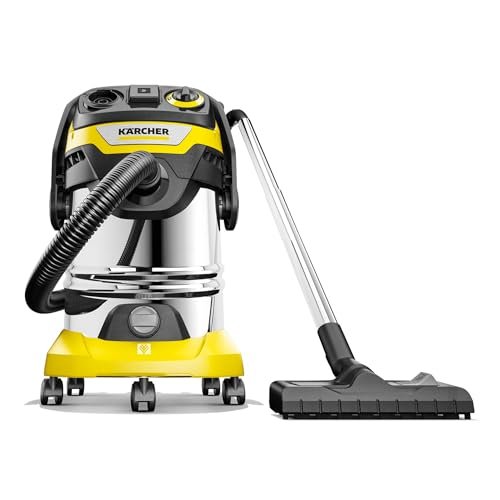
Karcher’s wet/dry vacuum line in the US splits cleanly into three consumer tiers, and the model names confuse a lot of buyers. The labels “WD3”, “WD5”, and “WD6” get thrown around in marketing and on Amazon listings, but the actual SKUs you’ll find on shelves are the WD 3, the WD 5/P (with a power-tool outlet), and the WD 6 P S (Power, Stainless steel). Karcher US doesn’t sell a plain WD 5 or WD 6 anymore, even though plenty of search results still use those shorter names.
I’ll use the short names through this comparison because they’re what people actually type, but every reference is to the current 2026 US-market SKUs. Now to the actual question: which one do you buy?
Quick Comparison Table
| Feature | Karcher WD 3 | Karcher WD 5/P | Karcher WD 6 P S |
|---|---|---|---|
| Tank capacity | 4.5 gal | 6.6 gal | 8 gal |
| Tank material | Plastic | Plastic | Stainless steel |
| Drain plug | No | No | Yes |
| Motor input | 1000W | 1100W | 1300W |
| Peak HP | 2.8 | 6.0 | 6.2 |
| Hose length | 6.5 ft | 11.5 ft | 11.5 ft |
| Cord length | 19.7 ft | 26 ft | 26 ft |
| Total reach | 26 ft | 33 ft | 37 ft |
| Weight (empty) | 10.8 lbs | 19.2 lbs | 21.8 lbs |
| Casters | 4 | 5 | 5 |
| Power-tool outlet | No | Yes (auto on/off) | Yes (auto on/off) |
| Semi-auto filter cleaning | No | Yes | Yes |
| Extension tubes | Plastic | Plastic | Stainless steel |
| Flexible accessory hose | No | No | Yes |
| Price tier | Budget | Midrange | Premium |
Two upgrade jumps, two different stories. The WD 3 to WD 5/P jump is about gaining workshop capability: the power-tool outlet, the longer cord, and the semi-automatic filter cleaning are genuinely useful additions. The WD 5/P to WD 6 P S jump is mostly build quality: same workshop feature set, but with stainless materials and a bigger tank.
If you’re buying purely on functionality, you can stop at the WD 5/P and not miss anything important. If you’re buying on durability and finish, the WD 6 P S earns its premium.
What Karcher’s Cartridge Filter Actually Does
Before getting into individual model reviews, this is the thing Karcher does differently from Craftsman, Ridgid, and Shop-Vac, and it matters more than any single spec on the table above.
Most shop vacs ship with a paper or pleated cartridge filter that’s rated only for dry use. To suck up water, you have to physically remove the filter (or swap it for a foam wet filter, sold separately) before you start. Forget that step and the filter disintegrates into wet pulp inside your machine. I’ve done it. Probably most shop vac owners have.
Karcher’s cartridge filter is rated for both wet and dry use straight out of the box. You can vacuum sawdust from a sander, hit a wet patch, suck up water, and keep going. No filter swap, no wet foam sleeve to buy, no ruined paper cartridge. The filter itself sits in a top-mounted housing that you can pull out without sticking your hand into the dirty drum.
It’s not a deal-breaker if you don’t have it. Plenty of people happily run Ridgid and Craftsman shop vacs and remember to swap filters. But after using a Karcher, you notice the convenience every single time you do mixed wet/dry cleanup. That’s the entire pitch for the brand at any price tier.
The WD 3, WD 5/P, and WD 6 P S all share the same filter design. So whichever tier you pick, you get this advantage.
Karcher WD 3: The Entry Point
As the budget pick in Karcher’s US lineup, the WD 3 is a sensible shop vac with one genuine selling point: the cartridge filter. Beyond that, it’s a compact, lightweight, modestly-powered unit best suited to car cleanups, occasional garage spills, and small workshops where you don’t need much hose length.
The 4.5-gallon tank is fine for routine work. The 10.8 lb empty weight makes it the easiest of the three to carry up stairs or load into a car. The motor at 1000W (2.8 peak HP) is on the weak side compared to similarly-priced Craftsman and Ridgid models, which routinely advertise 4-5 peak HP in the same budget bracket. In practice, Karcher’s specs are conservative and the WD 3 pulls reasonable suction for daily tasks, but you’ll feel the difference if you’re trying to suck up heavy debris.
What you don’t get: no power-tool outlet, no filter cleaning button, only a 6.5 ft hose, and a 19.7 ft cord that’s noticeably shorter than the WD 5/P’s 26 ft. That short hose is the main limitation. You’ll be dragging the canister around constantly because you can’t reach across most rooms or under most cars without moving it.
The build is honest for the price. Plastic everywhere, four casters (no fifth swivelling caster like the bigger models), latches and clips that feel cheap. Several long-term retailer reviews flag latch durability as the most common failure point. Worth knowing.
For who: the WD 3 makes sense for occasional users with light needs. Apartment dwellers with a balcony or single-car garage. Anyone who needs a wet/dry vac for the car and the patio and not much else. People who want Karcher’s filter convenience but don’t need workshop-grade features. If you’ll use it weekly in a serious workshop, skip it and go to the WD 5/P.
Karcher WD 5/P: The Workshop Sweet Spot
The midrange WD 5/P is where Karcher’s lineup gets interesting. Two new features arrive at this tier and they’re both genuinely useful.
First: the onboard power-tool outlet. Plug a sander, mitre saw, or router into the WD 5/P’s outlet, plug the vacuum hose into the tool’s dust port, and the vacuum starts automatically when the tool starts and stops a few seconds after you stop the tool. It sounds gimmicky until you’ve used it. After ten minutes of sanding, you realise you haven’t had to manually trigger the vacuum once and the dust extraction has been near-perfect throughout. For anyone doing serious DIY or workshop work, this single feature justifies the step up from the WD 3.
Second: semi-automatic filter cleaning. A button on top of the unit fires pulsed air through the filter, dislodging clogged dust without removing the head. After 30 minutes of drywall sanding, when suction starts dropping, you press the button, wait a few seconds, and the filter is clear again. Useful enough that you’ll wonder why budget shop vacs don’t include it.
The other upgrades are quieter but still meaningful. The hose doubles to 11.5 ft, the cord stretches to 26 ft, and you gain a fifth swivelling caster that makes the unit noticeably more stable. The 6.6-gallon tank is a worthwhile bump from the WD 3’s 4.5. Total reach jumps from 26 ft to 33 ft.
What you don’t get: stainless steel anywhere, a drain plug, or the WD 6 P S’s flexible accessory hose. The plastic tank is fine for dry work but it scratches if you regularly drag it across concrete, and emptying dirty water means tipping the whole canister.
The Pro Tool Reviews team’s measured airflow at around 76 CFM is one of the WD 5/P’s notable weaknesses. That’s well below what comparable big-can Ridgid and Craftsman models pull at similar prices. For workshop dust extraction it’s fine. For sucking up large volumes of leaves or debris, you’d notice. Worth checking your priorities here.
For who: the WD 5/P is the right pick for most home workshop and DIY users. If you have a circular saw, a mitre saw, a sander, or any power tool with a dust port, the auto on/off feature is a genuine workflow upgrade. The longer hose and cord make it actually usable across a typical garage or workshop without constant repositioning.
Karcher WD 6 P S: Premium Build, Same Features
The WD 6 P S sits at the top of Karcher’s consumer line in the US. It keeps every WD 5/P feature without exception: the power-tool outlet, the semi-automatic filter cleaning, the 11.5 ft hose, the 26 ft cord, the 5-caster base.
So what does the premium tier buy you?
Stainless steel. The tank is stainless instead of plastic, which means it doesn’t scratch when you drag it around the garage and it doesn’t develop the dull-grey patina plastic shop vac drums get after a year of use. The extension tubes are stainless rather than plastic, which matters if you’ve ever cracked a plastic shop vac wand by stepping on it (I have, twice).
A drain plug. The bottom of the WD 6 P S has a screw-out drain port. After a wet pickup, you don’t have to lift and tip the whole canister to empty the dirty water. You unscrew the plug, point it at a drain, and walk away. Anyone who’s ever done a basement flood cleanup with a regular shop vac will understand why this matters.
A bigger tank. 8 gallons versus 6.6. Modest jump on paper, but it means roughly 20% fewer trips to empty the canister during a long job.
A flexible accessory hose. The WD 6 P S includes a small (~3.3 ft) flexible hose extension that the WD 5/P doesn’t. Useful for getting into tight spots in a car interior or behind appliances.
Trusted Reviews measured the WD 6 P S at about 80 dB on full power. That’s loud, though not significantly louder than any other shop vac in this class. The WD 6 P S also weighs 21.8 lbs empty, three pounds more than the WD 5/P. With debris in the tank you’re past 30 lbs, which means it’s not a unit you’ll grab for quick cleanups. It’s a workshop tool that lives where you use it.
For who: the WD 6 P S earns its premium for buyers who’ll regularly do wet pickups (basement floods, garage spills, car detailing) and want the drain plug, OR who specifically value the stainless build for longevity. For a dry-only workshop, the cheaper WD 5/P does everything the WD 6 P S does.
Karcher vs Craftsman, Ridgid, and Shop-Vac
The honest competitive picture: Karcher generally trails the major US brands on raw airflow and capacity-per-dollar. A 16-gallon Craftsman with 6.5 peak HP costs less than the WD 6 P S and pulls more air. A 5.5 HP Ridgid in the WD5/P’s price range will too. If you walked into Lowe’s looking for the most suction per dollar, you’d buy Craftsman or Ridgid.
Where Karcher wins is the experience of using the thing, not the spec sheet. The cartridge filter that handles wet and dry without swap. The top-mount filter removal that doesn’t require sticking your hand into the dirty drum. The 5-caster stability on the WD 5/P and WD 6 P S. The semi-automatic filter cleaning button. The general feeling that someone designed this thing for actual humans rather than just to hit a HP number on the box.
Whether that earns Karcher’s premium is a personal judgement call. For occasional users who’ll empty filters once a month, probably no. For weekly workshop users who’ll appreciate the convenience features every session, probably yes.
If you’ve landed on this article specifically wanting a Karcher, the WD 5/P is the right pick for most people, the WD 6 P S is the right pick if you’ll do regular wet work or care about the stainless build, and the WD 3 is the right pick only if you’re committed to the budget tier. If you’re still cross-shopping brands, our best shop vac roundup covers Craftsman, DeWalt, Ridgid, and Shop-Vac alongside Karcher with broader competitive context.
Which Karcher Should You Buy?
Three quick scenarios.
You want the cheapest Karcher and don’t need workshop features. Buy the WD 3. Light, compact, the cartridge filter handles wet and dry, fine for car cleanup and occasional patio sweeping. Don’t expect it to keep up with serious workshop use. The short hose and weaker motor will frustrate you within a few months.
You’ll use it regularly in a home workshop or garage. Buy the WD 5/P. The power-tool outlet alone justifies the step up from the WD 3, and the semi-automatic filter cleaning, longer cord, and 5-caster base round out a unit that handles everything most home users will throw at it. The plastic tank is the only meaningful corner-cut and it’s not a problem unless you’re particularly hard on equipment.
You want the best Karcher and you’ll do regular wet work. Buy the WD 6 P S. The stainless tank with drain plug genuinely earns its premium for anyone who’ll regularly suck up water, mud, or sticky garage spills. Same workshop features as the WD 5/P plus a build that’ll outlast plastic-bodied competitors. The extra weight is the only real downside, and it lives in your workshop anyway.
You’re not sure if Karcher is the right brand at all. This depends on how much you value filter convenience versus raw airflow. If you’ll regularly switch between wet and dry pickups, Karcher’s no-swap filter is genuinely better. If you mostly do dry workshop dust collection and want maximum suction per dollar, a Craftsman or Ridgid will probably serve you better. Both are valid choices and the answer depends on your specific routine.
For broader category context, the wet dry vacuum vs shop vac guide covers the difference between these heavy-duty canister vacuums and the cordless wet floor cleaners from Tineco, Dyson, and Dreame that share the “wet/dry” name. And the types of wet floor cleaners hub maps the full five-way taxonomy if you’re not yet sure which kind of wet floor machine you actually want.
Karcher won’t be the cheapest answer. It also won’t be the most powerful. What it will be is the one you’ll be least annoyed with after a year of use, and for a tool that lives in your garage and gets pulled out at awkward moments, that counts for a lot.
Head-to-Head Comparison
Detailed Reviews
Karcher WD 6 P S Multi-Purpose 8 Gallon Wet/Dry Shop Vacuum
Best premium KarcherKarcher's premium consumer pick, with a stainless tank, drain plug, and stainless wands that justify the step up from the WD 5/P, though Ridgid and Craftsman offer more raw airflow at similar money.
What We Like
- Stainless steel tank with drain plug, empty dirty water without tipping the canister
- Strongest suction in Karcher's consumer line, locks onto carpet at full power
- Stainless steel extension tubes resist the cracking that affects plastic shop vac wands
- Onboard power-tool outlet with auto start/stop and semi-automatic filter cleaning
- Includes a flexible accessory hose extension that the WD 5/P does not
What We Don't
- Loud at maximum power (Trusted Reviews measured 80.1 dB)
- Heavy and bulky at 21.8 lbs empty, harder to move than the WD 5/P
- Replacement filter bags and cartridges cost noticeably more than generic shop vac consumables
- Premium price competes with stainless Ridgid models that have higher raw airflow
Karcher WD 5/P Multi-Purpose 6.6 Gallon Wet/Dry Shop Vacuum
Best mid-range KarcherThe sweet-spot pick for DIYers and woodworkers, combining a power-tool outlet, button-press filter cleaning, and 26 ft cord into a workshop-friendly package, though raw airflow trails comparable big-can rivals.
What We Like
- Onboard power-tool outlet with auto start/stop genuinely useful for sanders, mitre saws, and routers
- Push-button semi-automatic filter cleaning restores suction without removing the head
- 5-caster base gives noticeably better stability than 4-wheeled rivals
- Top-mount filter removal lets you swap filters without touching debris
- Same wet/dry no-filter-swap design as the rest of the Karcher line
What We Don't
- 76 CFM airflow is below comparable big-can Ridgid and Craftsman models
- Replacement cartridges and fleece bags are pricier than generic shop vac consumables
- Hose storage is awkward, a recurring complaint in retailer reviews
- Plastic tank scratches more readily than a stainless WD 6 P S
Karcher WD 3 Multi-Purpose 4.5 Gallon Wet/Dry Shop Vacuum
Best entry-level KarcherA genuinely capable budget shop vac at the $100 mark with the rare ability to handle wet pickup without swapping filters, but the short hose and lack of workshop features keep it firmly in the entry-tier.
What We Like
- Compact and light at 10.8 lbs, easy to lug to the car or carry between rooms
- Cartridge filter handles wet and dry pickup without swapping, unlike most budget shop vacs
- Decent set of accessories included for the sub-$100 price (hose, extension tubes, switchable floor nozzle, crevice nozzle)
- Built-in blower function adds versatility for clearing leaves and sawdust
What We Don't
- Short 6.5 ft hose limits reach without dragging the canister
- 1000W motor is on the weak side compared to similarly-priced Ridgid and Craftsman models
- No power-tool outlet and no semi-automatic filter cleaning
- Plastic latches and clips feel cheap, several long-term reviewers report durability concerns
Sources & Research
Continue Reading
Explore more wet & dry vacuums content or browse our other categories.
Frequently Asked Questions
- What's the difference between Karcher's WD3, WD5, and WD6?
- The WD3 is the entry-level budget 4.5-gallon model with no power-tool outlet and a short 6.5 ft hose. The WD5/P sits in the midrange tier, jumps to 6.6 gallons, adds an onboard power-tool outlet with auto start/stop, and adds semi-automatic filter cleaning. The WD6 P S is the premium pick: it keeps every WD5/P feature, scales the tank to 8 gallons, and swaps the plastic body for stainless steel with a drain plug. The WD3 to WD5/P jump is functional. The WD5/P to WD6 P S jump is build quality.
- Why is Karcher's filter system better than Craftsman or Ridgid?
- Karcher's cartridge filter handles both wet and dry pickup without swapping. With most Craftsman, Ridgid, and Shop-Vac models, you have to remove the paper or pleated filter before vacuuming water and either run filterless or swap to a foam wet filter. Karcher's filter is rated for both modes out of the box. It's a small thing, but anyone who's ruined a paper filter by forgetting to swap it before a wet pickup will appreciate the convenience.
- Is the Karcher WD5/P or WD6 P S better for woodworking?
- The WD5/P is the practical pick for most woodworkers. Both have the same power-tool outlet with auto start/stop, the same semi-automatic filter cleaning, and the same 11.5 ft hose. The WD6 P S adds capacity, stainless build, and a drain plug, but for sander or mitre saw dust collection on a typical home workshop scale, the WD5/P does everything the WD6 P S does. Step up to the WD6 P S only if you want the stainless tank or the bigger capacity.
- Is the Karcher WD6 P S premium worth it over the WD5/P?
- Only if you specifically want the stainless steel tank, the drain plug, the stainless steel extension tubes, or the extra 1.4 gallons of capacity. The feature set is identical otherwise: same power-tool outlet, same filter cleaning, same hose, same cord. If you'll regularly be sucking up dirty water and emptying it (basement floods, car detailing, garage spills), the drain plug alone might justify the upgrade. For dry workshop use, the WD5/P does the job.
- How does the Karcher WD line compare to Craftsman and Ridgid?
- Karcher generally trails on raw airflow and CFM. A comparable Ridgid or Craftsman at the same price often pulls more air, especially in the bigger-tank category. Where Karcher wins is the filter design (no swap between wet and dry), the 5-caster stability on the WD5/P and WD6 P S, the top-mount filter removal that keeps you out of the dust, and the build finish. If raw suction is your priority, look at Ridgid. If filter convenience and finish matter more, Karcher earns the price.
Written By
Home Vacuum Zone
Our team researches, tests, and reviews vacuum cleaners to help you make confident buying decisions.
Related Articles
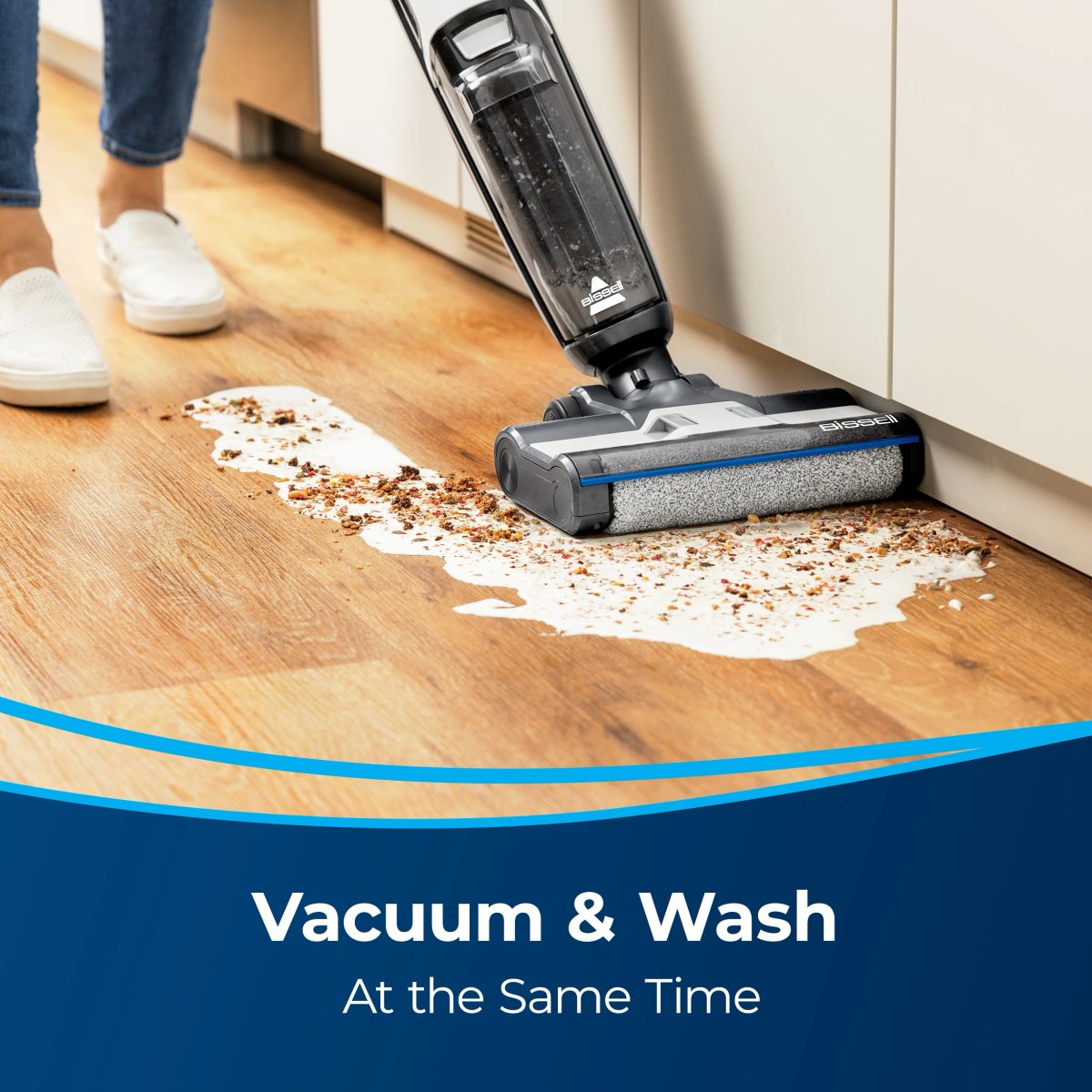
Bissell CrossWave HF3 Review: Vacuum and Mop in One
We tested the Bissell CrossWave HF3 cordless wet/dry vacuum. Read our review of simultaneous vacuuming and mopping performance on hard floors and area rugs.
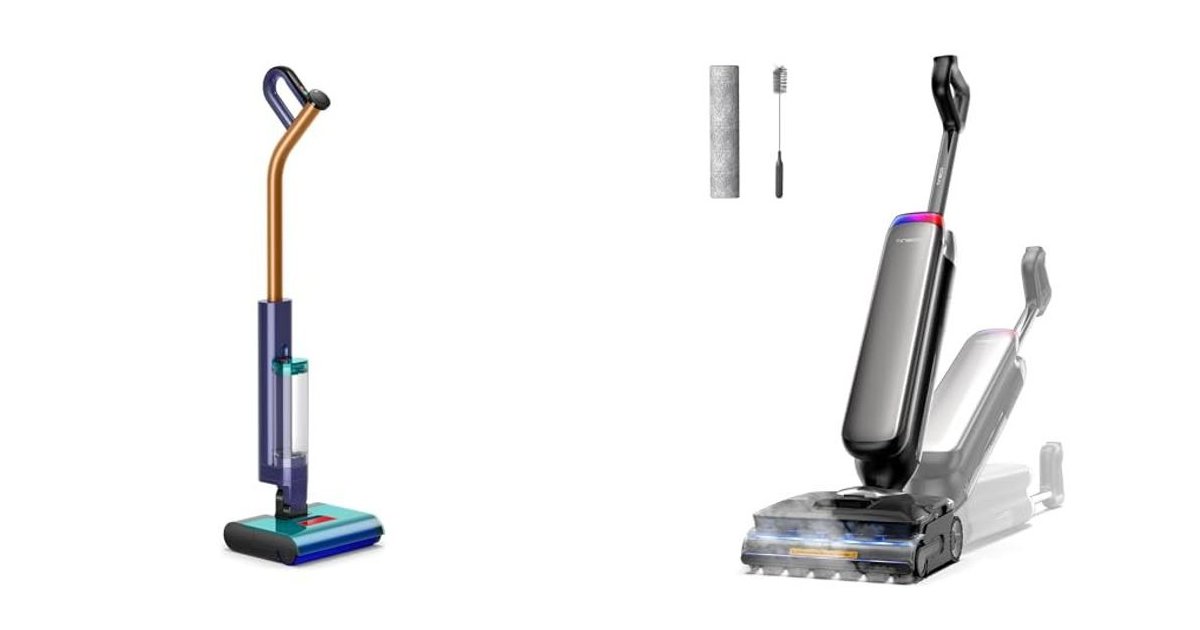
Dyson vs Tineco Wet Dry Vacuum: Which Brand Wins in 2026?
Dyson and Tineco take completely different approaches to wet dry floor cleaning. We compare their flagships, mid-range options, and brand philosophies to help you pick the right wet mop vacuum.
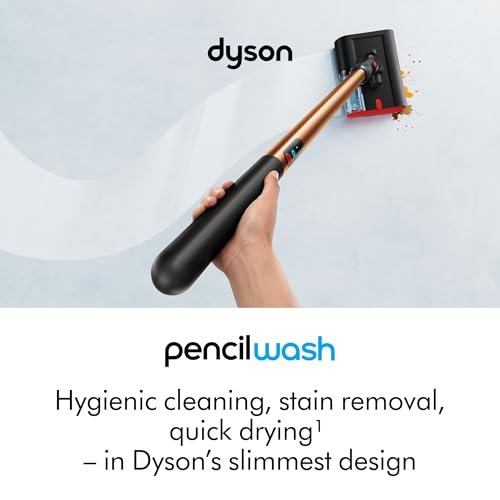
Dyson PencilWash Review: Lighter Than a Broomstick
Hands-on Dyson PencilWash review covering the ultra-light wet floor cleaner's real performance, battery life, and the trade-offs Dyson made to hit 4.6 lbs.